
Swiss developer breaks ground on 1.6 GWh redox flow storage project
The redox flow project has enormous storage capacity, expected to be finished in mid-2028.
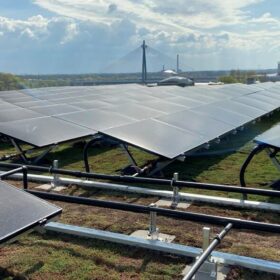
Stadium in Austria now hosting Europe’s largest PVT system
Austria has installed Europe’s largest photovoltaic-thermal (PVT) solar system at a stadium, using Sunmaxx modules combined with geothermal energy and brine heat pumps to provide climate-neutral electricity and heat.
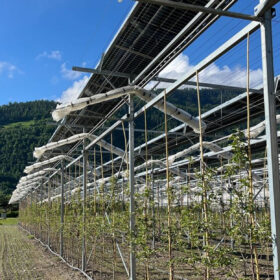
Agrivoltaics for cherries
Switzerland’s Energie360° and solar tech specialist Insolight have agreed to build a 1,300-panel agrivoltaic plant on a cherry farm in Leuggern, Switzerland. The facility will combine crop protection and dynamic light management.
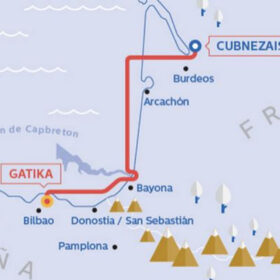
France, Spain raise interconnection link capacity from 2.8 GW to 5 GW
France and Spain have driven up the planned capacity of their Bay of Biscay electricity interconnection from 2.8 GW to 5 GW, with €1.6 billion ($1.8 billion) in financing approved by the European Investment Bank (EIB).

At least 18 GW of batteries await Brazil’s planned auction
While Brazil is making progress in customer-side, “behind-the-meter” and off-grid battery solutions – with more than 700 MWh – it still lacks guidelines for a planned gigawatt-scale national auction. Markus Vlasits, president of the Brazilian Association of Energy Storage Solutions (ABSAE), tells pv magazine about the nation’s utility-scale battery bottleneck.

JA Solar, ARTsolar agree to expand PV module manufacturing in South Africa
JA Solar has set up a manufacturing partnership with South Africa’s ARTsolar to annually produce 340 MW of PV modules, supporting domestic content rules under South Africa’s procurement programs and reducing reliance on imports.

US Senate panel advances bill to phase out clean energy tax credits
A US Senate committee has advanced a bill to phase out the investment tax credit by 2028 and end the residential solar tax credit by the end of this year, proposing major rollbacks to clean energy incentives. The “One Big Beautiful Bill” includes broader tax code changes that could impact project economics across the renewable energy sector.
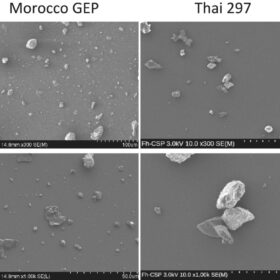
Different dust, different impact on PV module performance
Scientists in Germany have collected dust from Qatar, Morocco and Thailand to analyze the impact on the performance of uncoated solar glass and uncoated PV mini-modules. Their analysis has shown that dust coverage could range from 4% to 60%.

University of Queensland advances grid testing for hybrid renewables
Researchers at the University of Queensland are leading a project aiming to improve how hybrid renewable power plants – typically including solar and/or wind, along with battery energy storage – connect to Australia’s electricity grid.
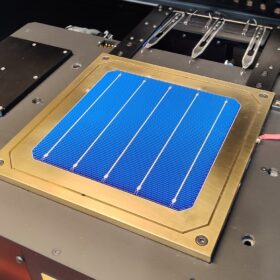
New study confirms sensitivity of heterojunction solar cells to soldering flux
Researchers in South Korea have found that the contamination by small amounts of soldering flux residues during heterojunction PV module manufacturing can induce significant long-term performance degradation. Careful control of flux application methods and incorporating drying steps are proposed as potential solutions.
