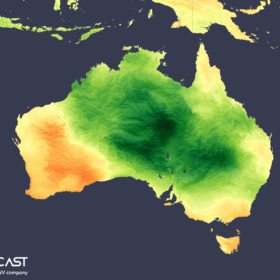
Wettest February since 2011 cuts irradiance across most of Australia
In a new weekly update for pv magazine, Solcast, a DNV company, reports that Australia’s wettest February in 15 years produced solar irradiance deficits of 15–30% across the country’s central and eastern regions.
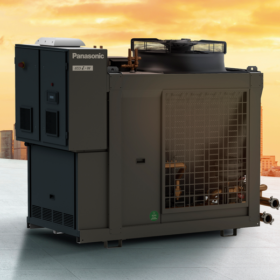
Panasonic debuts propane heat pump for light industrial, multi-residential buildings
Designed for commercial and multi-residential buildings, the Aqua‑G EVO heat pump can replace gas boilers, cascade up to eight units, and integrate with Panasonic’s complete HVAC ecosystem.

Enphase launches AI home energy management system
Enphase Energy has introduced an AI software platform in Australia and New Zealand that enables homeowners to reduce energy costs, increase clean energy self-consumption, and control key household appliances.
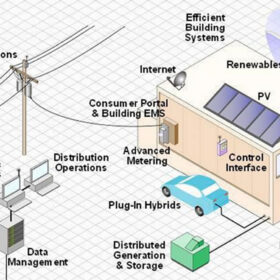
Industry 4.0 technologies raise cyber risks for smart renewables grids
An international research team developed a multi-stage intrusion detection system that uses supervised and unsupervised AI techniques to detect and mitigate cyber threats in smart renewable energy grids. The system can reportedly achieve high accuracy, low false positives, and real-time detection, outperforming traditional intrusion detection system models.
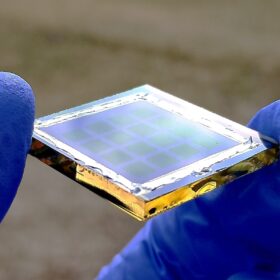
Swedish scientists build bifacial chalcogenide solar cell with 15.1% efficiency
Researchers in Sweden developed a bifacial chalcoprite solar cell using a titanium-doped indium oxide (ITiO) back contact, achieving 68% bifaciality. The device is able to maintain strong front-side performance with around 15% efficiency, 595 mV open-circuit voltage, and 75% fill factor.”

California bill targets DER access to resource adequacy market
California Senator Josh Becker says proposed legislation would require regulators to allow distributed energy resources (DERs), including batteries and electric vehicles, to participate in the state’s grid reliability market.
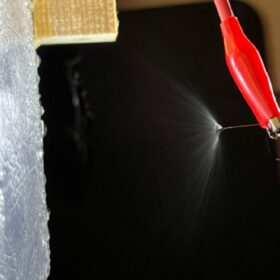
Electrospray cooling can boost PV panel performance with minimal water use
Researchers in Turkey optimized electrospray cooling for PV panels, achieving optimal power output with minimal water use and a compact, energy-efficient setup. Their study identified irradiance, flow rate, voltage, and nozzle distance as ideal parameters.
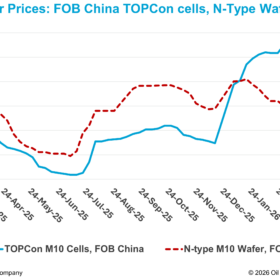
China solar cell prices fall for third consecutive week as upstream costs ease
In a new weekly update for pv magazine, OPIS, a Dow Jones company, provides a quick look at the main price trends in the global PV industry.

Germany classifies cybersecurity threats for energy infrastructure
Germany’s Federal Network Agency will use a new, structured framework developed by Fraunhofer IOSB-AST to classify cybersecurity incidents in the energy sector. The methodology enables comprehensive risk assessments, from initial reports to systemic and economic impacts, supporting consistent evaluation across the entire energy value chain.

Austria deploys 1.63 GW of solar in 2025
Austria’s photovoltaic market slowed in 2025, with around 1,634 MW of new capacity installed, bringing the country’s total PV capacity to approximately 9.9 GW.
