
China’s new five-year plan deepens shift toward focus on renewables system
China’s 2026 to 2030 policy plan elevates clean electricity as a central driver of economic growth, with greater emphasis on system integration and industrial use.

UAE installs around 1 GW of solar in 2025
Analysis from GlobalData finds the UAE’s cumulative solar capacity increased from 5.7 GW to around 6.7 GW last year. The country’s annual solar deployments are forecast to increase in the coming years, with 20 GW of installed solar expected by the end of the decade.
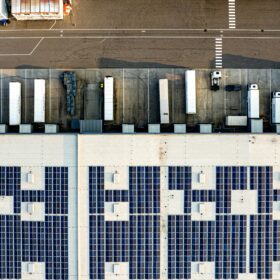
Survey reveals PV systems in Germany outperform lifespan expectations
Researchers analyzed 16 years of data from over 1 million PV systems in Germany and found annual degradation is just 0.52–0.61%, roughly half prior estimates. Environmental factors like heat, frost, and air pollution affect performance, while smaller systems degrade less than larger ones, boosting long-term reliability and profitability.
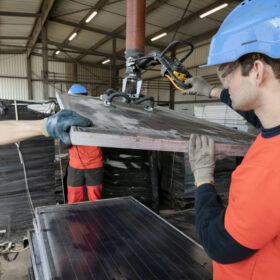
France selects six operators for PV module recycling capacity
France’s solar recycling body has selected Envie 2E, Galloo, Rosi, RVE, and First Solar to manage rising volumes of end-of-life panels, with combined capacity exceeding 45,000 metric tons (MT) per year.
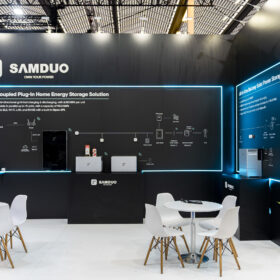
Samduo launches residential AC-coupled plug-in storage systems
The Chinese manufacturer said its new Nex E6000 and Nex E6000H storage systems combine a 6 kWh battery, an inverter, and an integrated energy management system, with scalable design allowing multiple units to be networked for higher capacity and coordinated energy sharing.
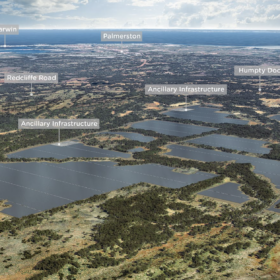
French developer seeks approval for Australia’s largest solar BESS
French renewables developer TE H2 has filed a government application seeking approval for a 2.7 GW solar farm and 6 GWh battery energy storage project to be built in Australia’s Northern Territory.
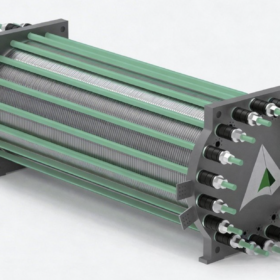
Advait Greenergy opens 30 MW electrolyzer assembly facility in India
Advait Greenergy has launched a 30 MW electrolyzer assembly facility in Gujarat, India, with plans to scale capacity to 1 GW annually.
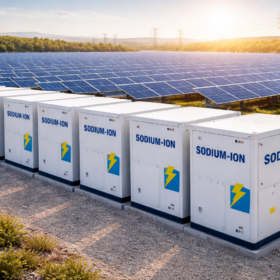
2D carbon selenide offers route to competitive sodium-ion batteries
Researchers at TU Delft propose using 2D carbon selenide as a sodium-ion battery anode, offering a theoretical capacity of 589 mAh/g with minimal volume expansion. Computational studies confirmed the material’s structural and thermal stability, as well as tunable electrochemical properties, making it a promising candidate for large-scale, renewable-linked energy storage.
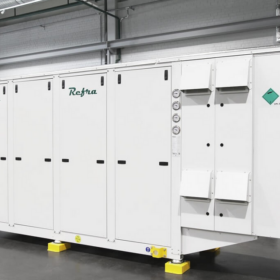
Refra debuts water-to-water heat pump for commercial, industrial use
Lithuania-based Refra has launched its Oasis series of water-to-water heat pumps and chillers, offering capacities from 34 kW to 600 kW for small to large commercial and industrial applications. Featuring propane refrigerant, inverter-controlled compressors, and modular multi-circuit design, the units can reach a coefficient of performance of up to 5.1.

US residential solar set for 33% decline in 2026, says Roth Capital Partners
Roth Capital Partners says it expects a sharp drop in US residential solar installations as tax credit changes and Foreign Entity of Concern (FEOC) rules constrain financing.
