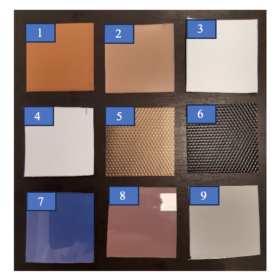
French startup develops colored flexible CIGS solar modules
France-based Solarcloth tested and compared three colored solutions: MorphoColor interference sheets from the German Fraunhofer Institute; ColorQuant interference encapsulants from the German company Lenzing Plastics; and diffuser films from Switzerland-based Solaxess.
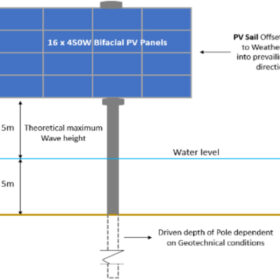
Rotating, vertical floating PV system for offshore applications
An international group of scientists has designed a patented mooring tech and a vertical PV system that reportedly allows the bifacial solar panels to align with the prevailing wind direction to shed wind loads. Depending on a project’s latitude, the system can deliver different power yield.
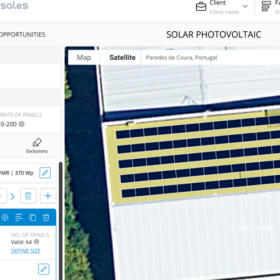
Effizency launches web-based simulator providing PV system, heat pump prices, savings
Portugal-based Effizency, a developer of sales software for solar PV and heat pump solution providers, has launched a new web-based simulator module that its customers can use to deliver initial price quotes and savings estimates to potential buyers.
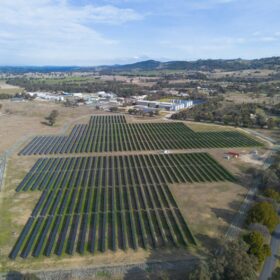
Flow Power plans DC-coupled battery to boost solar flexibility
Australian renewables developer and electricity retailer Flow Power will install a 3 MW DC-coupled battery energy storage system alongside the recently completed Cootamundra Solar Farm in New South Wales in a move designed to improve the flexibility of the facility.
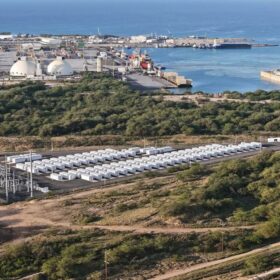
U.S. installs 3 GW / 10.5 GWh of energy storage in Q2 2024
The United States continues to set quarterly records for energy storage installations across each key market segment, said a report from Wood Mackenzie.

Preliminary decision announced on U.S. solar cell imports
The preliminary decision on countervailing duties on cells from companies in Vietnam, Cambodia, Malaysia and Thailand are lower than some expected for several major Chinese producers.

Turkey exempts four large manufacturers from anti-dumping duties applied to 5 countries
The Turkish authorities applied an anti-dumping tariff of $25/m2 solar modules imported from Vietnam, Malaysia, Thailand, Croatia, and Jordan.
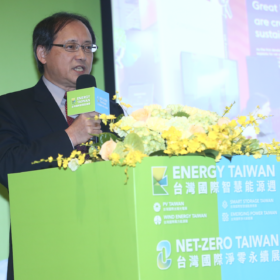
Energy Taiwan 2024 trade show kickoff delayed due to storm
The opening day of Energy Taiwan and Net-Zero Taiwan 2024 has been postponed from Oct. 2 to Oct. 3 as Taiwan braces for Typhoon Krathon, a tropical cyclone that is now approaching the southern coast of the island.
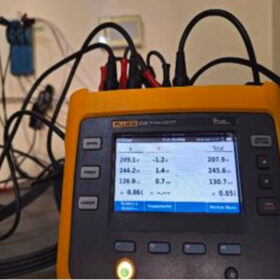
PV system sizing for 100% self-consumption
A group of researchers has proposed a new method for the sizing of PV systems that do not rely on an anti-dump system and operate without the possibility of injecting power into the grid. The novel approach requires an estimate of the annual hourly profile and the minimum power demanded, as well as the use of an irradiance meter and an electrical network analyzer.
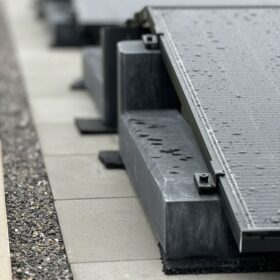
Wattstone launches new concrete bases for rooftop PV
The German company said its new products are suitable for PV systems with tilt angles ranging from 0 to 15.6 degrees.
