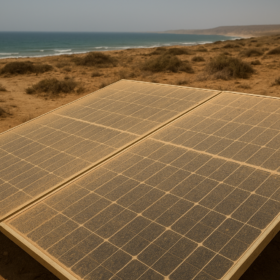
The impact of dust on PV systems in arid coastal environments
A Saudi–Egyptian research team investigated the effects of four types of dust on photovoltaic panels in arid coastal environments, finding that power losses can reach up to 48%.
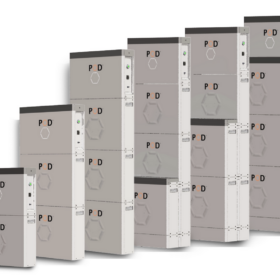
Australia’s PowerCap enters US with sodium-ion batteries
Australia’s PowerCap has entered the US market with its sodium-ion stationary storage systems and plans to build a manufacturing facility to serve customers across the Americas.

Photovoltaic-thermoelectric generators can boost power beaming efficiency
Researchers from China and United Arab Emirates tested a photovoltaic-thermoelectric generator module performance in the receiving end of a laser wireless power transmission system. Under varied atmospheric turbulence conditions, they found the device was able to address thermal stress and improve PV receiver performance.

Ireland earmarks €27 million for energy communities
Ireland is investing close to €27 million ($31 million) in community-based energy projects promoting climate action, including small-scale solar installations around the country. A previous phase of the program allocated a total of €24 million to 650 community projects.

India solar module output to exceed 125 GW in 2025, says Wood Mackenzie
Wood Mackenzie says in a new report that India’s solar manufacturing boom risks overcapacity and calls for a shift from expansion to cost competitiveness.
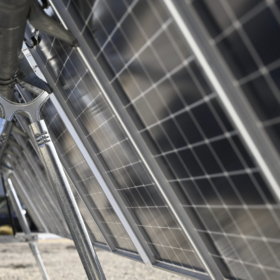
Nextracker unveils Earth Truss system for uneven Australian terrain
Nextracker has introduced its Earth Truss foundation technology in Australia, backed by funding from the Australian Renewable Energy Agency (ARENA), to enable solar deployment on rocky and hard soil sites.
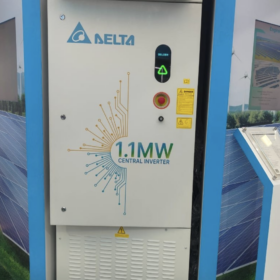
India-developed inverter targets large-scale solar expansion
Delta Electronics has unveiled a 1.1 MW modular inverter made in India, designed for large-scale PV projects and built to expand local manufacturing capacity to 5 GW within three years.

Mitsubishi presents new residential air-to-water heat pumps
Mitsubishi said that the two new products of its Hydrolution EZY series can produce domestic hot water up to 75 C when outdoor temperatures reach -25 C. The new systems have capacities of 6 kW and 7.1 kW.

World’s largest heat pump under development in Germany
The 162 MW project is being developed by German utility MVV Energie. The system will use water from the Rhine river as a heat source and is expected to generate heat with temperatures of up to 130 C.
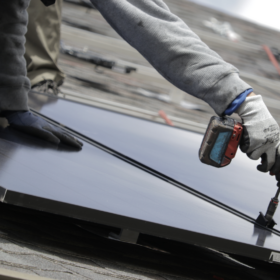
Cutting solar permit delays could add 20 million US rooftop systems
A new report says streamlining rooftop solar permitting could lower costs by up to 61%, enabling 20 million more US families to install solar by 2040 and save $1.2 trillion on energy bills.
