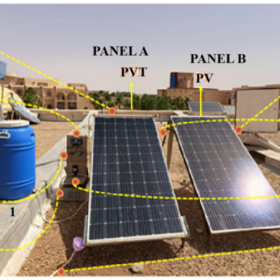
Water-spray cooling can improve PV module efficiency by 28% in arid environments
An Algerian research team has developed a smart water-spray cooling system for PV panels that activates only when temperatures exceed a set threshold, boosting efficiency while minimizing water use in desert conditions. The system raised power output and reduced module temperatures, offering similar efficiency to continuous cooling but with far lower water consumption, pump operation, and costs.
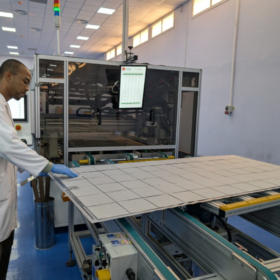
Algeria proposes reduced customs duty rate on solar panel components
Algeria’s draft finance law for 2026 includes a reduced customs duty rate of 5% on products intended for the manufacture of solar panels, as well as an exemption for electrolyzers required for hydrogen production.

PV-driven desalination system for brackish water
Algerian researchers have built a single-stage solar and battery desalination system for brackish water that uses a hybrid spotted hyena optimizer and maximum power point tracking (MPPT) algorithm to improve efficiency. Simulations and real-time tests showed high performance, steady water output, and low salinity under changing solar conditions.
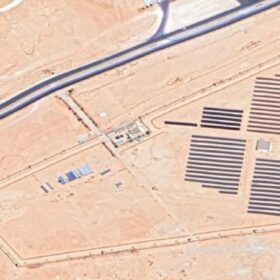
One-year testing shows ground-mounted PV achieves ‘superior’ performance ratio in Sahara
A 12-month testing of a 1.1 MW pilot PV facility built in 2016 in Algeria’s desert has shown that tracking-equipped ground-mounted PV can reach high performance ratio values under Saharan conditions. The plant was built with a variety of PV module technologies.

EU gives 10 GW solar, wind project priority status
The Medlink Renewable Generation project, a collaboration between Italy, Algeria and Tunisia, will deploy 10 GW of renewables in the two north African countries for both local use and export.
Chinese manufacturer plans solar glass factory in Algeria
China’s Kibing Group is looking to develop a solar glass manufacturing facility in Algeria with an annual production capacity of 1.53 million tonnes.
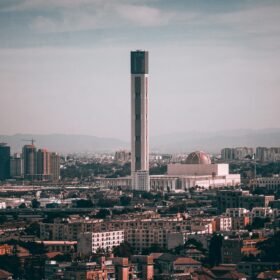
African PV imports from China up 60% in one year, says Ember
Think tank finds evidence of “take-off” for solar in Africa, with import growth is spread across the continent. Ember analysis notes import surge has potential to markedly increase electricity generating capacity in some countries.

Improving PV cleaning schedules without large datasets
Scientists in Algeria have developed a low-cost solution to optimize cleaning operations for all PV systems. The proposed approach works “effectively” without heavy data requirements, according to its creators.
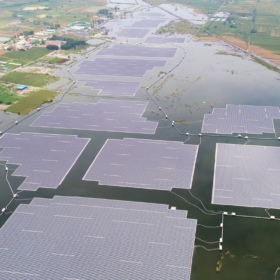
Water-based photovoltaics reach global capacity of 21.18 GW
An international research team has developed an index-based remote sensing method to see trends in the global development of water-based PV. It has found that China currently accounts for 80% of the global total deployed capacity.
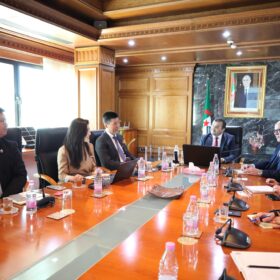
Longi expresses interest in solar manufacturing in Algeria
A delegation from Chinese module maker Longi met with officials from Algeria’s Ministry of Energy and Mining last week to discuss cooperation that would support Algeria’s domestic solar market, including a solar manufacturing facility.
