
China’s first zero-carbon highway includes PV, paving way for sustainable transport
China’s first zero-carbon highway, the 152.7 km Jinan-Hefei Highway, has opened for traffic, featuring renewable energy systems, advanced tracking technology, and design elements aimed at cutting net carbon emissions by 9,000 tons per year.

Bharat Petroleum wins 150 MW of solar in NTPC auction with INR 2.55/kWh bid
India’s Bharat Petroleum has offer the lowest bid of INR 2.55 ($0.03)/kWh in NTPC’s new 1.2 GW solar auction, securing 150 MW of project capacity.

World’s largest compressed air energy storage project breaks ground in China
Huaneng Group has begun phase two of its Jintan Salt Cavern CAES project in China. It is set to become the world’s largest compressed air energy storage facility with groundbreaking advancements in power output and efficiency.
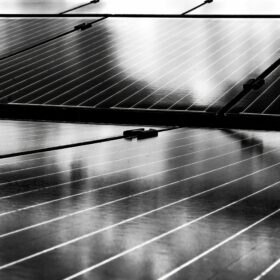
Bifacial perovskite solar can achieve bifaciality of 90% when tilted at 20 degrees
New research from India has shown that bifacial perovskite solar cells can achieve a 2% higher power conversion efficiency with a tilt angle of 20 degrees. The scientists also developed a bifacial perovskite solar cell for applications in both tandem or single-junction PV devices.

New model to generate high-resolution annual solar energy potential maps
Researchers in Iran have used digital elevation models to improve the accuracy of solar energy potential maps. Their model is intended to identify the best areas for solar panel deployment in urban areas.
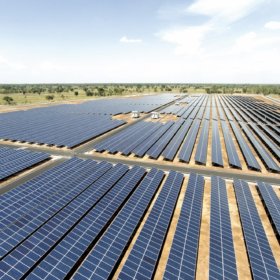
Sterling and Wilson wins $141 million deal for 500 MW solar project in India
Sterling and Wilson Renewable Energy has won an engineering, supply (excluding PV modules), and construction contract for a 500 MW (AC) solar PV plant in the Indian state of Gujarat, including three years of full operations and maintenance support.
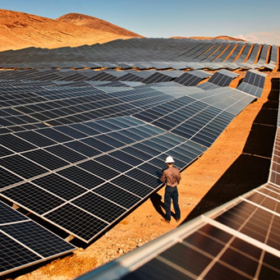
Chinese PV Industry Brief: Huadian connects second phase of 1 GW project
Huadian says it has connected the second phase of its 1 GW Tengger solar project to the grid in China’s Inner Mongolia region, while First Applied Material has extended the construction timeline for its Vietnam film encapsulation project to December 2025.
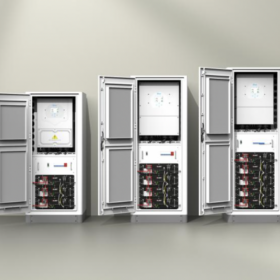
Bslbatt launches low-voltage integrated battery storage system
China’s Bslbatt has unveiled its latest product: an integrated low-voltage energy storage system that combines inverters ranging from 5 kW to 15 kW with 15 kWh to 35 kWh battery storage systems.

China Huaneng secures $2.1 billion equity boost for renewables expansion
China Huaneng Group has obtained CNY 15 billion ($2.1 billion) in equity financing for its renewable energy subsidiary, Huaneng Renewables, from five major state-owned entities. The deal, the largest renewable equity financing transaction of 2024, will reduce financial pressures for Huaneng Renewables and support its wind and solar projects.

Scientist develops machine-learning method to identify faulty solar panels
A scientist in Sweden has developed a new hybrid local features-based method using thermographs to identify faulty solar panels.
