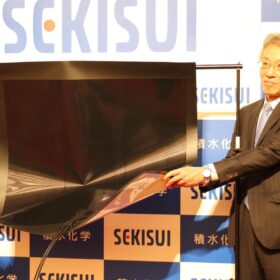
Sekisui Chemical invests in 100 MW perovskite solar production line
Japanese plastics manufacturer Sekisui Chemical is investing in a 100 MW production line to make lightweight perovskite solar panels for low load-bearing rooftops, with an operational start in 2027. It will also acquire a production facility from Japanese electronics manufacturer Sharp.
Gensol wins $104.7 million EPC deal for 225 MW of solar in India
Gensol Engineering has agreed to handle engineering, procurement, and construction (EPC) duties for a 225 MW AC (276 MW DC) grid-connected solar project in India. It will also manage operations and maintenance for three years.

GCL Energy, Ant Digital raise CNY 200 million by tokenizing solar assets in China
GCL Energy Technology and Ant Digital Technologies have raised CNY 200 million ($27.4 million) by tokenizing solar assets in a bid to pioneer blockchain-based financing in renewable energy.
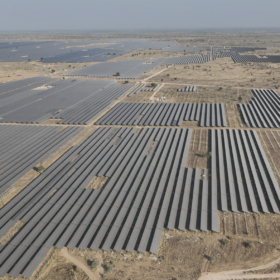
SECI allocates 600 MW solar in India at $0.036/kWh
Solar Energy Corp. of India (SECI) has allocated 600 MW of solar at $0.036/kWh in its 1 GW solar tender, with Acme Solar, Adani Renewable Energy, and ReNew emerging as winners.
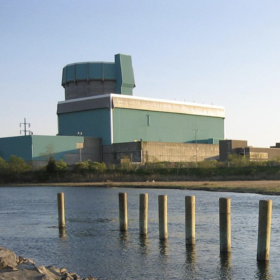
NY utility approves battery storage project on shuttered US nuclear site
The Long Island Power Authority (LIPA) has approved 79 MW and 50 MW battery storage projects in Suffolk County, New York state. It is granting Key Capture Energy capacity and dispatch rights under 20-year power purchase agreements (PPA).

China’s first zero-carbon highway includes PV, paving way for sustainable transport
China’s first zero-carbon highway, the 152.7 km Jinan-Hefei Highway, has opened for traffic, featuring renewable energy systems, advanced tracking technology, and design elements aimed at cutting net carbon emissions by 9,000 tons per year.

Bharat Petroleum wins 150 MW of solar in NTPC auction with INR 2.55/kWh bid
India’s Bharat Petroleum has offer the lowest bid of INR 2.55 ($0.03)/kWh in NTPC’s new 1.2 GW solar auction, securing 150 MW of project capacity.

World’s largest compressed air energy storage project breaks ground in China
Huaneng Group has begun phase two of its Jintan Salt Cavern CAES project in China. It is set to become the world’s largest compressed air energy storage facility with groundbreaking advancements in power output and efficiency.
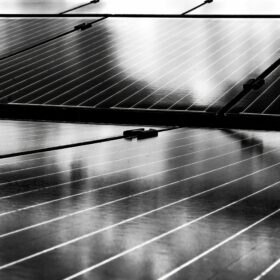
Bifacial perovskite solar can achieve bifaciality of 90% when tilted at 20 degrees
New research from India has shown that bifacial perovskite solar cells can achieve a 2% higher power conversion efficiency with a tilt angle of 20 degrees. The scientists also developed a bifacial perovskite solar cell for applications in both tandem or single-junction PV devices.

New model to generate high-resolution annual solar energy potential maps
Researchers in Iran have used digital elevation models to improve the accuracy of solar energy potential maps. Their model is intended to identify the best areas for solar panel deployment in urban areas.
