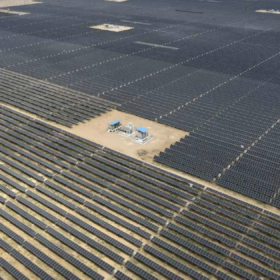
India passes 132.8 GW of installed solar capacity
India’s installed solar capacity reached 132.85 GW at the end of November 2025, led by utility-scale projects in Rajasthan, Gujarat and Maharashtra, according to the central government.
Aiko achieves 24.8% efficiency in commercial solar module production
The result concerns the company’s Comet 3N modules and has been confirmed by TÜV Nord in Germany.

Rooftop bifacial PV can produce over 9% more power than monofacial systems in high-latitudes
A study analyzing urban bifacial PV systems in high-latitude areas found they can generate 9–13% more electricity than monofacial panels under snow conditions, particularly in winter, while also achieving a lower levelized cost of electricity. The research developed a techno-economic optimization model considering snow effects, panel orientation, interrow spacing, and operation modes, highlighting sensitivity to market conditions and discount rates.

Canon testing solar at Japanese data center
Canon IT Solutions has begun testing a solar PV system to power its Tier 4 data center in Nishitokyo, aiming to boost renewable energy use and reduce costs. The system is expected to generate around 69 MWh annually and enhance power resilience during emergencies.
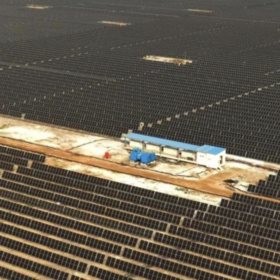
India’s NTPC brings 359.58 MW of solar capacity into operation
NTPC Ltd., India’s largest power producer, says new solar projects in the states of Gujarat and Rajasthan will lift its total commercial capacity to more than 85.5 GW, as it accelerates renewable deployment through subsidiaries.
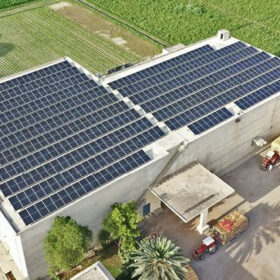
Pakistan unveils new net metering rules for rooftop PV
Pakistan’s National Electric Power Regulatory Authority (NEPRA) has initiated a public consultation on proposed revisions to solar net-metering regulations. A key change under consideration is a reduction in the tariff for surplus solar power, which could be cut by half from PKR 26 ($0.093) per kWh to PKR 13 per kWh.

India’s Tata Power plans solar ingot and wafer plant
Tata Power has revealed plans to build a 10 GW solar ingot and wafer factory in India to secure upstream supply for its expanding manufacturing base, as it forecasts domestic demand to exceed 50 GW by 2030.

Geon launches new inverter battery for residential, commercial use
The Indian manufacturer said its new Geon Gelithium series is an efficient back-up solution for homes, clinics, small retail outlets, offices, and light commercial applications. The system is available in two versions with an inverter rated capacity of 1,250 VA and 2,500 VA, respectively.

South Korea sets 3.5 million heat pump target in national decarbonization push
The South Korean government says it will deploy incentives, legal changes and industry backing to scale heat pump adoption nationwide, aiming to cut emissions from fossil fuel–dependent heating by the mid-2030s.

Bhutan tenders 120 MW solar project
Bhutan’s authorities are seeking a developer to design, supply, install, test and commission a 120 MW solar farm. The deadline for applications is Jan. 26, 2026.
