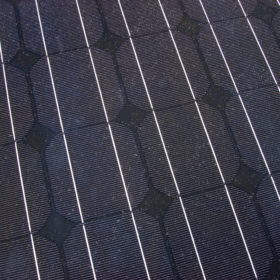
Predicting solar power generation with ‘deep photovoltaic nowcasting’
The ‘deep photovoltaic nowcasting’ project developed by Chile’s Institute of Engineering Sciences of the University of O’Higgins, Canada’s Laval University and Japan’s Kyoto University, seeks to make short-term, high-resolution projections of solar energy generation.

Bangladesh prepares to tender solar rooftops on public buildings
The government will reportedly be ready to tender contracts to install rooftop PV on its buildings across eight divisions of the nation in as little as three months’ time.
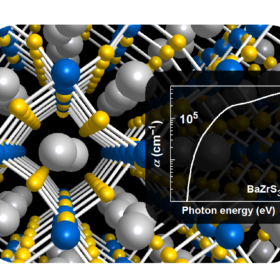
New perovskite promises 38.7% efficient tandem cells
Japanese researchers have identified a perovskite material with a strong band edge gap and high stability which they say could offer 38.7% efficiency if used in the correct tandem cell architecture.
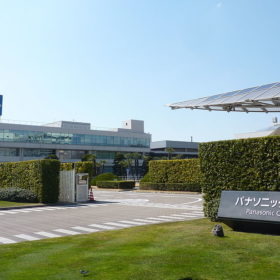
Panasonic and Toyota launch EV battery business as solar lifts Kyocera and LG
Electronics corporations Panasonic, Kyocera and LG have filed results for the nine months to December 31. All three reported uplifts because of their solar activity and LG has said it will dive deeper into energy storage. Panasonic is deepening its commitment to automotive batteries through a new joint venture with Toyota.

India concludes world’s largest renewables-plus-storage tender at $0.0566595/kWh
Pumped hydro and battery projects, coupled with renewables, offer the world’s lowest peak clean electricity tariff. The tender, which received bids for for 1.62 GW of capacity against the 1.2 GW sought, saw Greenko secure 900 MW of pumped storage capacity and Renew Power 300 MW of battery storage.
Change at the top of state grid could have ramifications for Chinese solar
The world’s largest utility has looked outside the energy industry for its new head for the first time in its history, apparently signalling a lack of patience in Beijing with the slow pace of implementing a lower electricity price and of guaranteeing purchase of all clean power generated in the nation.
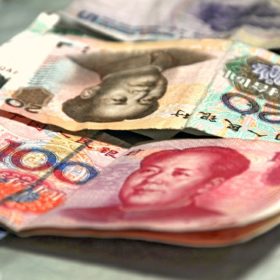
Main shareholder of Chinese module maker ET Solar files for bankruptcy
The move, by Taitong Industry Ltd, will come as a fresh blow to the Chinese module manufacturer, which twice failed to go public – in the U.S. and China – and whose project development business suffered a battering in China when Beijing reined in subsidies in 2018.

A mathematical method for choosing the best PV technology in hot, dry areas
The proposed model is said to perform better at energy prediction than software tools such as PVWatts, PVSyst or RetScreen. The approach was validated on two 5 MW PV plants in the same district of the Indian state of Rajasthan.
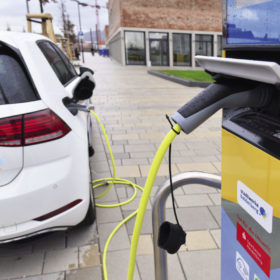
Indian companies to partner on EV charging infrastructure
State-owned Energy Efficiency Services and New Delhi-based Bharat Heavy Electricals have agreed to set up public charging stations for electric vehicles on highways across India.
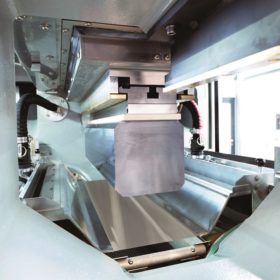
MIT researchers put slimmer silicon back on the table
With solar grade polysilicon prices having plummeted in recent years, cutting down on consumption of the material has not been a priority. But strategies exist and significant savings can be made through deploying thinner wafers that use less silicon, insists a new paper published by MIT and NREL. And as manufacturers are increasingly hitting dead ends on other routes to cost reduction, this option could be back on the table for many.
