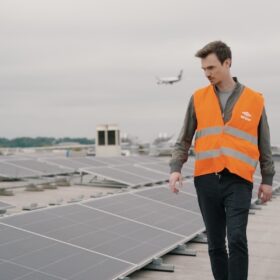
Anti-glare film enables PV system at Brussels Airport
Warehouses De Pauw (WDP) has installed an 8.5 MW solar system at a warehouse near Brussels-Charleroi Airport, equipping roughly 40% of modules with Phytonics anti-glare film to prevent air traffic disruption while maintaining near-full energy output.
The Hydrogen Stream: CMB.Tech secures China green ammonia offtake
CMB.Tech has secured an offtake agreement for renewable ammonia from CEEC Hydrogen Energy’s 800 MW wind-and-solar-powered project in China, while Germany’s Gascade Gastransport said it has converted about 400 km of gas pipelines to form a new hydrogen transport corridor.
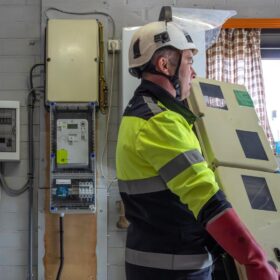
Belgian grid operator enters final phase of digital meter rollout
Grid operator Fluvius says that 80% of all homes, apartments and small businesses in the Belgian region of Flanders, including 89% of all solar panel owners, have now converted to digital meters as the company begins the final phase of the mandatory switch over.
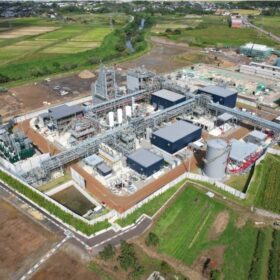
The Hydrogen Stream: Inpex launches blue hydrogen, ammonia demonstration plant in Japan
As Inpex launches its hydrogen park in Japan, ITM Power announces a possible delivery of 710 MW of electrolysers to Germany’s Stablegrid and Shell works on a 100 MW electrolyser in Germany.

Engie completes 800 MWh battery in Belgium, considers expansion
Engie has fully commissioned its 200 MW/800 MWh battery in Vilvoorde, Belgium, and is assessing a potential 100 MW/400 MWh expansion while advancing additional large-scale storage projects.

World’s first solar park featuring hydrogen-producing PV modules takes shape in Belgium
A 2 MW solar park in Wallonia, Belgium, will rely 50 kW of hydrogen-producing solar modules developed by Solhyd, a spin-off from KU Lueven. The installation will be the first demonstration of Solhyd’s technology at a commercially-relevant scale.
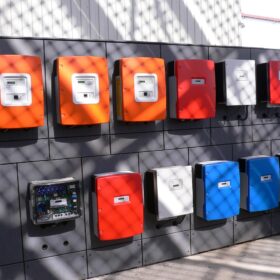
Belgian grid operator reports sharp decline in solar inverter failures
Belgian grid operator Fluvius says inverter-related complaints have fallen by more than half since 2023, even as solar panel connections rose 8.5% year on year amid record sunshine.

Battery projects dominate Belgium’s 2025 capacity market awards
Battery storage secured nearly all new-build capacity in Belgium’s latest capacity market auctions, cementing its central role in the country’s power supply plans through 2030.

The Hydrogen Stream: Australia opens second Hydrogen Headstart round
The Australian government has aunched the second round of its Hydrogen Headstart program to provide revenue support for large-scale renewable hydrogen projects, while the UK government is seeking industry input on rules for hydrogen-to-power participation in its capacity market.

Belgium powers up first 400 MWh phase of mainland Europe’s largest battery
Engie and Sungrow have connected the initial 100 MW/400 MWh phase of the Vilvoorde battery project in Belgium, set to reach 200 MW/800 MWh by late 2025.
