
Ecuador authorizes 643 MW of distributed energy projects
Ecuador’s Ministry of Environment and Energy has authorized private companies to develop 643 MW of renewable energy projects across the country.
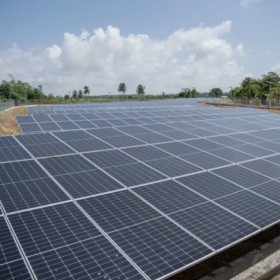
Guyana commissions 0.6 MW solar farm on island
The Guyanese government has secured energy independence on Leguan, the country’s second island to do so, with a 0.6 MW grid-forming solar farm and 1.2 MWh of battery storage, according to Prime Minister Mark Phillips.

Brazil bets big on batteries
Energy storage in Brazil is entering a period of accelerated growth. Despite the absence of a legal framework, companies are expanding battery production, diversifying models, and preparing storage to play a central role in the energy transition.

Argentina’s oversubscribed BESS tender draws record-low bids
The Argentine Energy Secretariat has received significantly more bids than expected for its public call to install large-scale battery energy storage systems (BESS) in the Buenos Aires metropolitan area (AMBA). Although the tender aimed for 500 MW, the AlmaGBA procurement drew proposals totaling 1,347 MW on the back of highly competitive pricing and strong industry interest.
The Hydrogen Stream: NGV to install 100% hydrogen-fueled linear generator
National Grid Ventures (NGV) will test the world’s first 100% hydrogen-fueled linear generator at its Northport plant for 12 months, supported by $11 million in New York State funding.

Tesla delivers Megapack batteries for 912 MWh storage project in Chile
Tesla has delivered 240 Megapack batteries to the port of Puerto Arica for Colbún’s 228 MW/912 MWh solar-plus-storage project in Chile’s Arica and Parinacota region, scheduled for commissioning in mid-2026.

Agrivoltaics for sugarcane
Brazilian scientists have investigated the potential of agrivoltaics on sugarcane fields and have found this combination may provide benefits in terms of both agricultural and electricity yield. Their results showed that under certain conditions the sugarcane yield below the panels can be higher than that of plots without PV.

Brazil’s solar capacity reaches 60 GW
The latest report from the Brazilian Association of Photovoltaic Solar Energy (Absolar) says Brazil’s operational solar fleet consists of 42.1 GW from small and medium-sized systems and 17.9 GW from large-scale solar plants. Solar currently represents 23.5% of all installed capacity in the Brazilian electricity grid.
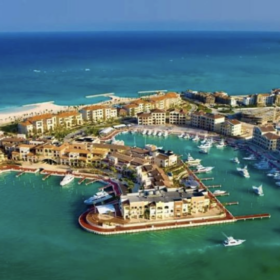
Dominican Republic tenders up to 600 MW solar, wind with mandatory storage
The Dominican Republic has launched a tender for up to 600 MW of solar and wind capacity, requiring projects to include at least four hours of battery storage to support stability in the National Interconnected Electric System (SENI).

Copenhagen Infrastructure Partners plans 1 GW of PV-wind, 3,831 MWh BESS
Copenhagen Infrastructure Partners (CIP), a Danish renewables investor, has sought environmental clearance in Chile’s Antofagasta region for a $1.3 billion mixed-generation project pairing 1,004 MWp of solar and 152 MW of wind with a 3,831 MWh battery energy storage system (BESS) to aid grid stability.
