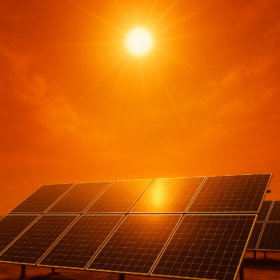
Dual PV module cooling tech based on water, air
Scientists in Hungary have built an experimental rig that uses a 60 W polycrystalline solar panel with 152 holes drilled into its frame for air cooling, as well as high-conductivity copper alloy pipes and fins placed on its back for water cooling.
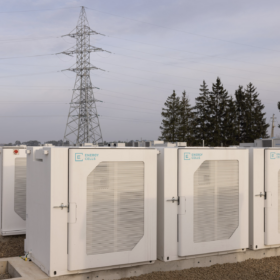
Lithuania expands energy storage scheme amid overwhelming interest
The Lithuanian Ministry of Energy and Environment has approved additional funding for its energy storage procurement program after strong interest from potential beneficiaries. Meanwhile, Trina Storage has secured the first 180 MWh of battery projects in the country under its new gigawatt-hour-scale battery energy storage system (BESS) portfolio in the Baltics.
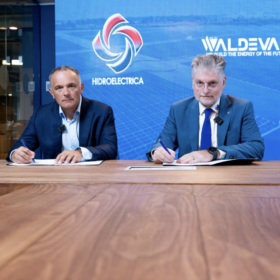
Romanian utility signs deal for 10 MW floating solar project on reservoir
Romania’s Hidroelectrica has signed a contract with Waldevar Energy for a 10 MW floating solar project billed as Europe’s largest on a reservoir.
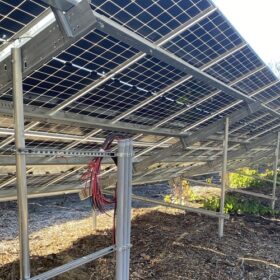
Parameter analysis of 842 bifacial solar modules from 236 manufacturers
An international research team has conducted an extensive overview of bifacial solar modules from 39 countries. Their analysis took into account the best of the median values indicated in the product specifications and found that heterojunction and back-contact panels provide the best parameters.

UNDP seeks bids for hybrid solar at wastewater plant in Ukraine
The United Nations Development Programme (UNDP) is running a tender for a hybrid solar system to support a wastewater treatment facility in northeastern Ukraine. The deadline for applications is Aug. 12.
Moldova introduces guarantees of origin certificate for renewables
Moldova has introduced an electronic guarantees of origin system to certify renewable energy production, with certificates recognized across the European Union through integration with the EU-wide register.

Hungary’s solar capacity surpasses 8 GW
Hungary’s Ministry of Energy says rising levels of solar production contributed to keeping the share of imported electricity below 20% across the first six months of the year, compared to nearly 25% over the same time period last year.
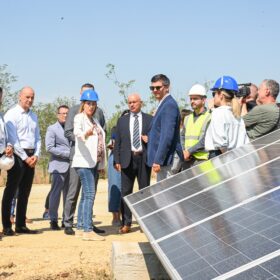
Serbia switches on 10 MW of solar
The 10 MW Petka power plant is the first solar site to be operated by state-owned utility Elektroprivreda Srbije.
Slovenia opens €29 million call to fund priority solar, wind projects
Slovenia has opened a €29 million ($33.7 million) call under the European Union’s Modernisation Fund to support priority solar and wind projects, with applications due by Jan. 7, 2026.
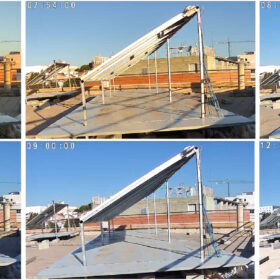
Precise backside irradiance modeling for bifacial PV is often unnecessary
A European research group has developed a new “empirical” method for measuring the backside irradiance of bifacial PV system. The proposed approach was tested across several European locations and it was found to enable annual performance calculations with a fixed backside irradiance share value.
