
The Hydrogen Stream: EU auction attracts 132 bids for 8.5 GW electrolyzer capacity
The European Hydrogen Bank’s pilot auction has drawn 132 bids, exceeding the available budget, while Australia has finalized an agreement to build a hydrogen hub.

Slovenia’s new solar additions hit 400 MW in 2023
Slovenia recorded 400 MW of new PV installations in 2023, taking its total installed capacity to 1.1 GW, according to figures from the Ministry of the Environment, Climate and Energy.
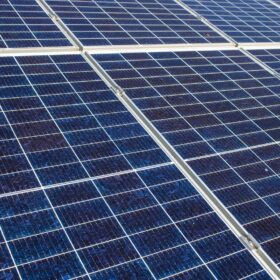
Janom Investments enters Croatian solar market with 30 MW plant
Slovakia’s Janom Investments has announced its first investment in Croatia through a 30 MW solar plant. CEO Andrej Sršeň says the company is now evaluating other projects in the country, with an estimated capacity of more than 200 MW.
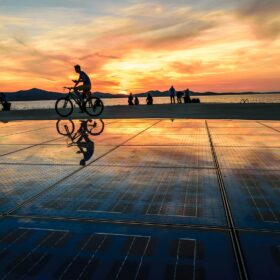
Croatia deployed 238.7 MW of solar in 2023
The Renewable Energy Sources of Croatia says the country’s total installed solar capacity now stands at 462.5 MW. It says the country will come close to entering the “gigawatt club” by the start of 2025.
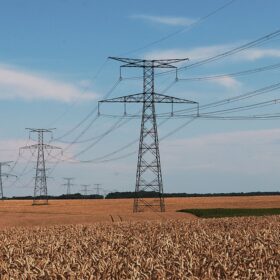
Romania proposes auction-based grid connections for plants above 1 MW
Romania’s Ministry of Energy has published a draft order outlining a move to an auction-based grid-connection process for solar projects above 1 MW in size. The change, which is currently subject to public consultation, could be implemented from January 2025.
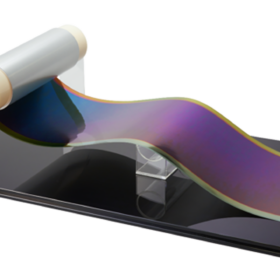
Sekisui Chemical to open solar module factory in Slovakia
Denisa Sakova, Slovakia’s Deputy Prime Minister and Minster of Economy, has signed an agreement with Japanese plastics manufacturer Sekisui Chemical, which is developing flexible photovoltaic panels. Sakova says the aim is to explore the possibility of producing the panels in Slovakia.
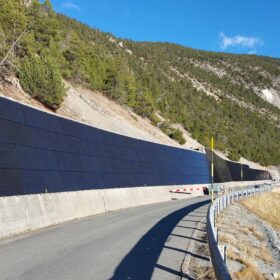
Engadiner Kraftwerke energizes second PV plant on Swiss retaining wall project
Swiss hydropower company Engadiner Kraftwerke said the new PV system went into service in the Swiss Canton of Graubunden to generate 230,000 kWh per annum. The array utilizes solar modules provided by Lithuanian manufacturer Solitek.
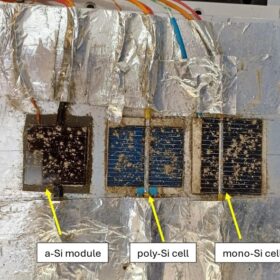
The effect of extreme dust conditions on PV system performance
Scientists in Romania have found that extreme dust conditions may cause losses of 45.35% and 38.14% in maximum power and short-circuit current under outdoor conditions for different kinds of solar modules. They warned that, if the effects of climate change escalate, resulting in less rainfall and more frequent sandstorm events originating from the Saharan region, extreme scenarios are very likely to occur in Europe.
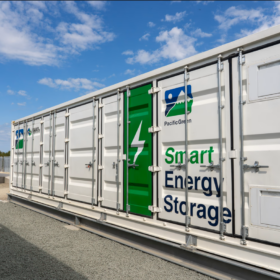
Pacific Green targets 12 GWh battery storage rollout
UK renewables developer Pacific Green Technologies says it will double down on battery energy storage systems as a priority in 2024, as it has expanded its global pipeline to 6 GWh over the past year.
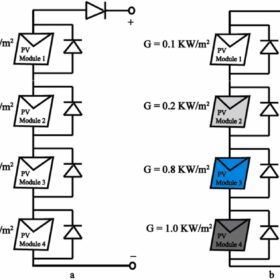
Novel MPPT technique based on Coronavirus algorithm
The proposed algorithm is intended for harvesting the maximal power in PV systems operating in varying weather scenarios. According to its creators, the new approach can be applied on a low-cost microcontroller.
