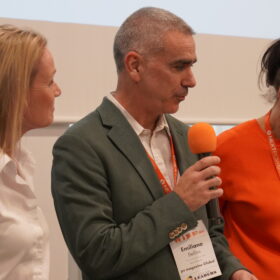
Voices of leadership: How inclusion is powering innovation forward
This article of the Women in Solar+ Europe series brings together experts and leaders featured throughout 2025 to reflect on why leadership must be redefined for today’s realities. Their insights highlight inclusion not as an add-on, but as the very heart of effective, future-ready leadership.
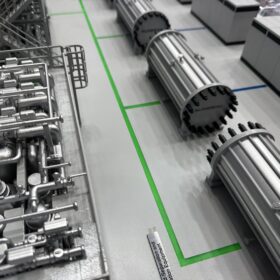
The Hydrogen Stream: RWE commissions 100 MW hydrogen electrolyzer
RWE has started commissioning a 100 MW electrolyzer in Germany to supply renewable hydrogen under long-term contracts, while Hydrogen Utopia International and Hydrogen Systems are advancing plans to build waste-to-hydrogen plants in Saudi Arabia.
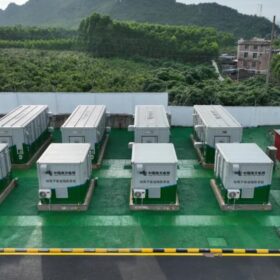
Sodium-ion battery cells already near lithium-ion cost parity, set to get cheaper
By 2050, sodium-ion batteries with fast learning rates could deliver storage at 11–14 €/MWh – cheaper than lithium-ion at 16–22 €/MWh – while also offering higher energy-to-power ratios and high cycle durability, a new research finds.

New multi‑hotspot detection tech based on Lab* feature descriptor
A Husqvarna researcher developed a fast, interpretable PV hotspot-detection method using IR thermography and Lab* color-space features instead of heavy neural networks, achieving up to 95.2% accuracy with shallow classifiers. The lightweight system works in real time on drones or edge devices and could save 17,620 kWh and 8.9 tons of CO₂ annually by improving fault detection in solar panels.

Over 1 TW of renewables awaiting approval in Europe
Aurora Energy Research’s latest report says Europe requires €600 billion ($700.2 billion) of investment by the end of the decade, increasing to €1.5 trillion by the middle of the century, to support the expansion of the continent’s renewable energy.
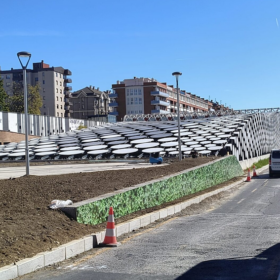
Spanish startup develops BIPV systems for tunnel exits, entrances
Spain-based Izpitek has developed an 86 kW building-integrated photovoltaics (BIPV) installation for tunnel entrances and exits that supplies power for lighting, demonstrating how solar energy can be adapted to complex architectural environments.
French regulator highlights flexible grid connections, battery queue pressures
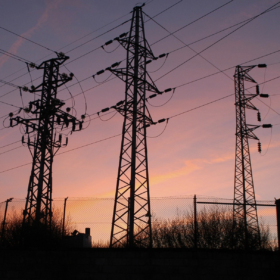
France’s energy regulator says wider use of flexible grid connections is becoming essential as solar and battery projects compete for limited network capacity, with storage connection queues now totaling 2.8 GW.
Campaign group protests giant solar projects in Portugal
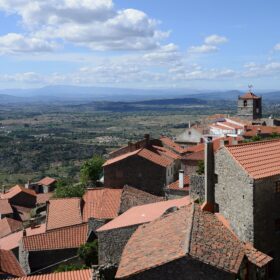
A campaign group in Portugal is challenging large-scale solar developments in Beira Baixa, Portugal. Developers of a proposed 867 MW solar site told pv magazine sustainability is central to the project, including biodiversity measures and tree planting at a rate 18 times higher than removals.

UK startup claims its electrolytes can triple flow battery energy density
A startup led by Cambridge University scientists and the former chair of Oxford PV is attempting to commercialize flow battery electrolytes with greater energy density than vanadium-based batteries. Kodiaq Technologies claims its electrolytes can be deployed as a drop-in solution for redox flow batteries.

Poland’s massive new airport project to host utility-scale solar-plus-storage project
Poland’s Central Transport Port company tendered 20 MW of solar PV plus 50 MW of battery storage capacity with a working time of two hours. The project’s capacities could be expanded in the future, when the Port Polska airport will be fully operational.
