
Rescue bid for German solar glass maker GMB fails
The solar glass manufacturer started insolvency proceedings in July. An investor’s bid has now failed, leaving over 200 employees facing layoffs.
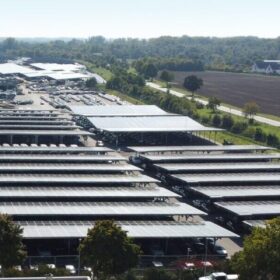
German developer commissions nation’s largest solar carport
Germany has brought a 17 MW photovoltaic carport online in Riedstadt, Hesse, spanning 76,000 square meters. It is expected to generate about 17 GWh per year, according to project developer Nawasol.

Nexwafe secures cash injection from EU scale up funding
German solar wafer manufacturer Nexwafe is one of eight companies receiving investment in the latest round of the European Commission’s Strategic Technologies for Europe Platform (STEP) Scale Up call, an initiative addressing a market gap in deep tech funding in Europe.
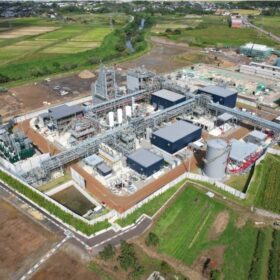
The Hydrogen Stream: Inpex launches blue hydrogen, ammonia demonstration plant in Japan
As Inpex launches its hydrogen park in Japan, ITM Power announces a possible delivery of 710 MW of electrolysers to Germany’s Stablegrid and Shell works on a 100 MW electrolyser in Germany.

Germany’s January-October solar additions reach 13 GW
The Federal Network Agency (Bundesnetzagentur) says Germany’s installation pace reflects shifting demand patterns between ground-mounted and rooftop PV systems.

German solar plant cleared to provide secondary control reserve
Sunnic Lighthouse says Germany’s first prequalified solar project for secondary control reserve shows how quickly PV assets can move into advanced grid-services markets.
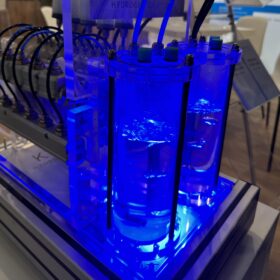
The Hydrogen Stream: European Commission launches H2 tender
The European Commission has launched its first Hydrogen Mechanism call to link suppliers with buyers, while Italian researchers say PV, wind, storage, and electrolyzers can slash island transport emissions by 90% and cut costs nearly one-third.

Fraunhofer ISE builds first perovskite-silicon tandem solar cell with copper metallization
Using the mask-and-plate copper metallization technique, scientists at the German research center fabricated a 1.21 cm² perovskite–silicon tandem solar cell featuring a heterojunction bottom device. The cell achieved an efficiency of 19.35%, reportedly the highest value reached to date for this cell type using galvanic front metallization.

German network operators approve grid connection of 46 GWh of storage at medium voltage level
Last year, German network operators received 9,710 connection requests for battery storage systems planned for commissioning at the medium-voltage level. These requests correspond to a total of 400 GW/661 GWh. At the transmission network level, large-scale battery storage projects with a combined capacity of 51 GW have already been approved for development in the coming years.
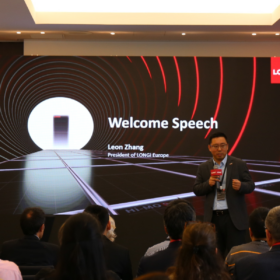
LONGi case study data finds BC outperforms TOPCon on generation and cost
At its October “Utility Day,” the company shared its latest financial data with German customers, affirming top market positioning and financial health.
