
Analyst anticipates India rebound after poorest solar figures for five years
Out of the total solar installations, 78% (2520 MW) came from utility-scale PV and 22% (719 MW) from rooftops, says a Mercom India report.

India’s Adani launches joint venture for renewables-powered data centers
AdaniConneX, the joint venture with US-based data center solutions provider EdgeConneX, will develop renewable energy-powered data centers with up to 1 GW of power demand in India over the next decade.
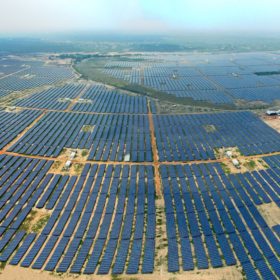
India could install 9.7 GW of new utility-scale solar in 2021
JMK Research expects strong growth in the large-scale solar business in India this year, due to strong growth in module and inverter shipments in the fourth quarter of 2020. Around 5.7 GW of new solar plants should be grid-connected in the first half of the year.

India added 1.4 GW of PV in October-December period
India’s new solar capacity additions in the third quarter of the country’s 2020-21 fiscal year were well above the 928 MW installed in the preceding July-September quarter.

India’s largest industrial carbon capture and utilization project
Indian Oil aims to capture carbon dioxide from hydrogen generation units at its Koyali refinery in the Indian state of Gujarat for enhanced oil recovery at the nearby Gandhar oilfield.

India joins race to develop high-efficiency solar cells
India’s Ministry of New and Renewable Energy is funding research to develop high-efficiency crystalline silicon solar cells, as well as perovskites.
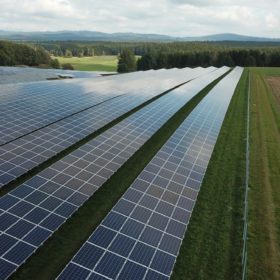
Indian state inching toward 10 GW of PV for farming
The success of the recent 6.4 GW solar auction in the Indian state of Andhra Pradesh has brought it closer to achieving its plan to install 10 GW of PV to support farmers.

Modeling the potential of lead-free perovskites
Scientists in India modeled the performance of tin-based perovskite (methylammonium tin triiodide) finding that with careful optimizations the material could achieve efficiencies beyond 28%.

Indian manufacturer to open 750 MW solar fab by April
Solar manufacturer Premier Energies is setting up a factory in Telangana with an annual cell and module production capacity of 750 MW. The fab will be equipped to produce large-format panels with wafer sizes up to 210mm.

India eyes 10 GW of ingot-to-module manufacturing capacity within two years
Under a production-linked incentive scheme, the government will reward manufacturers for building vertically integrated PV production lines. The scheme aims to attract 10 GW of production capacity by April 2023.
