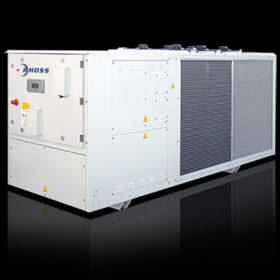
Rhoss launches reversible heat pumps
Conceived for industrial applications, the novel heat pumps can reportedly deliver hot water at 65 C from -10 C up to 35 C of external air, and hot water at 55 C down to -20 C of external air. Their coefficient of performance reaches up to 3.60.
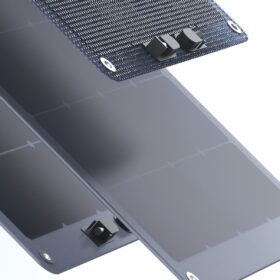
Italian startup debuts waterproof carbon fiber solar panels for off-grid applications
Levante, an Italian carbon fiber solar PV design and engineering company, has introduced 110 W and 55 W panels for offgrid recreational applications. The modules are lightweight, semi-rigid and made with recycled carbon fiber material.

The Hydrogen Stream: EU backs €400 million H2 scheme in Spain
The European Commission has cleared a €400 million ($455.2 million) Spanish aid program to scale renewable hydrogen output, backing up to 345 MW of electrolyzer capacity and targeting 221,000 tons of production via the EU Hydrogen Bank’s 2025 auction round.
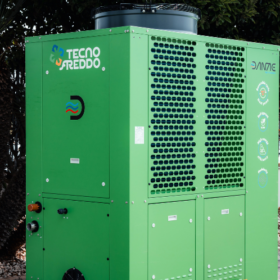
Frascold, Tecnofreddo present high-temperature propane heat pump
Conceived for industrial applications, the Danae heat pump system is available in 10 versions with cooling capacities ranging from 22.1 kW to 156.9 kW and heating capacities spanning from 24.8 kW and 181.6 kW.
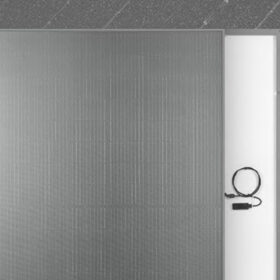
FuturaSun releases 390 W silver solar panel
The Italian manufacturer said the new version of its silver module is ideal for grey roofs and buildings with modern architecture. It uses a 3.2 mm silver-coated glass and features a power conversion efficiency of 19.52%.

The Hydrogen Stream: Fincantieri to build hydrogen-powered cruise ship
Fincantieri says it is building the world’s first hydrogen-powered cruise ship for delivery in late 2026, while Coca-Cola Bottlers Japan says it will debut the world’s first hydrogen-powered vending machine at the Kansai Expo this year.
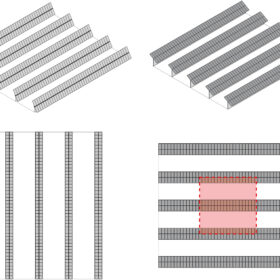
New simulation framework achieves higher dual land use efficiency in agrivoltaics
Researchers in Italy have conceived new agrivoltaic modeling for agrivoltaics that includes crop yield response curves for multiple crops. Once the electricity production coming from the PV modules is also assessed, the performance metrics for the agrivoltaic system as a whole are obtained.
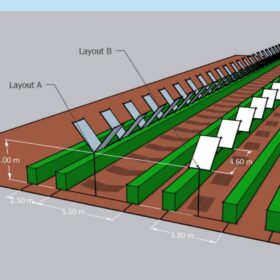
V-shaped PV system for agrivoltaic applications
An Italian startup supported by a group of scientists is developing a V-shaped agrivoltaic system that can reportedly find optimal application with bifacial modules and single-axis tracking. The proposed system configuration is claimed to reduce land use by 24 % compared to conventional setups.

Italy launches second agrivoltaics tender
Italy has launched a second agrivoltaics tender, allocating €323 million ($348.4 million) in unused funds from the first round, which awarded 1.5 GW of capacity in December 2024. Developers have until June 30 to submit bids.

Agrivoltaics for radicchio
An Italian research team has found that radicchio seedlings grown in a lab-scale greenhouse with a perovskite solar PV roof exhibited faster growth and larger leaves than the bare glass reference. In addition, simulations of such a PV roof revealed a positive energy balance, satisfying the energy demands of a typical greenhouse located in Italy.
