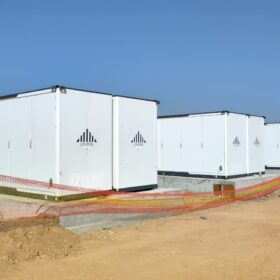
Italy, Great Britain and Germany most attractive battery markets in Europe, Aurora reports
Ambitious capacity targets and diverse revenue opportunities support case for battery energy storage system (BESS) investment in key European markets, new report from Aurora Energy Research finds. The fourth edition battery markets report also predicts Europe’s grid-scale BESS fleet will reach 55 GW by 2030.
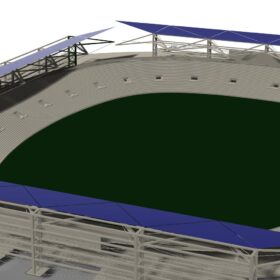
Sun-tracking photovoltaics for stadiums
Researchers in Italy have developed a sun-tracking PV system design for stadium covers. The proposed approach is said to offer both strong structural response and high energy yield compared to systems based on fixed structures.

The Hydrogen Stream: US researchers link H2 impact to production
US researchers say hydrogen’s climate impact depends primarily on production methods and feedstock emissions, while Nikola Corp. has recalled 95 hydrogen-powered trucks and filed for Chapter 11 bankruptcy.

Challenges of dismantling abandoned wind and solar farms
Researchers studying decommissioned wind and solar farms in Italy, Spain, Venezuela, and Argentina have found that weak regulations risk leaving more abandoned assets in their wake.
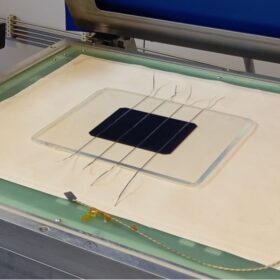
Italy’s Enea testing highly UV-transparent encapsulants
The Italian research agency has tested new UV aging tests on solar PV mini-modules made with UV-transparent polyolefins encapsulants and has found that thermal and chemical stability benefits in thermoplastic polyolefin-based (TPO) compared to EVA encapsulants.
The Hydrogen Stream: Air Products cancels three US projects
Air Products is pulling out of three US projects due to unfavorable economics and regulatory changes. The company says it remains focused on its Neom green project in Saudi Arabia and the Louisiana Clean Energy Complex
The Hydrogen Stream: Spanish government allocates €1.2 billion for renewable H2 clusters
The Spanish government allocated €1.2 billion ($1.26 billion) for seven green hydrogen clusters concentrated in Aragon and Andalusia. Meanwhile, an EU consortium started its work to develop diagnostic and monitoring tools for water electrolyzers.

Italy installed 6.8 GW of solar in 2024
The country’s cumulative installed PV capacity reached 37.08 GW at the end of December.
The Hydrogen Stream: TalusAg starts green ammonia production in Iowa
Landus and TalusAg have launched commercial green ammonia production in Iowa, backed by US federal clean hydrogen tax credits, while Iberdrola España and BP have started building Spain’s largest green hydrogen project, with 25 MW of capacity.
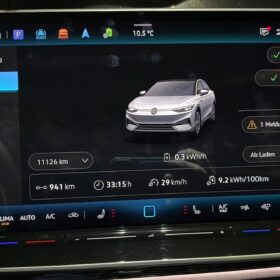
Volkswagen EV covers 941 km on single battery charge
A standard Volkswagen ID.7 Pro S electric car, equipped with a 86 kWh battery, consumed just 9.2 kWh/100 km of electricity during a maximum efficiency test in December 2024.
