
Solar, wind energy curtailment skyrocketed in Japan in fiscal 2023
New figures from Japan’s Ministry of Economy, Trade and Industry (METI) show that wind and solar power curtailment increased significantly to 1.76 TWh over the past 12 months, from 0.57 TWh in fiscal 2022 and 0.53 TWh in fiscal 2023.
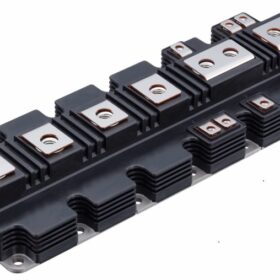
Fuji Electric launches high-power module for large power converters
The Japanese manufacturer said its latest power semiconductor module is based on a compact insulated-gate bipolar transistor (IGBT) and is designed for large capacity industrial power converters voltage of 2,300 V.

New electrolyte for safer, more stable solid-state batteries
Researchers in Japan have discovered a stable, highly conductive material that can be used as electrolyte for solid-state lithium-ion batteries. The material’s ionic conductivity is said to be higher than any previously reported oxide solid electrolytes, with a wide operating temperature range.
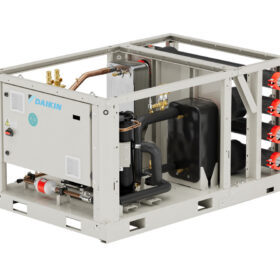
Daikin presents modular water-to-water heat pumps
The Japanese manufacturer said its new heat pump line features a modular approach to system design. The new products are available with capacities of 100 kW, 125 kW and 160 kW and can reportedly achieve a water output temperature of 60 C.

AGC uses recycled glass from PV panels for float glass production
The Japanese glass, material, and chemical manufacturer announced a successful test using recycled cover glass from solar panels in the manufacturing of float glass, with technology supplied by Tokuyama Corporation.

The Hydrogen Stream: Stadler finalizes longest hydrogen train test
Stadler says it has wrapped up a hydrogen train test, while Ballard has secured a long-term agreement to supply 1,000 hydrogen fuel cell engines through 2027.
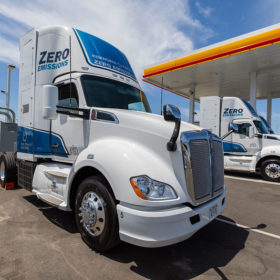
The Hydrogen Stream: Companies to close 3 hydrogen stations in Germany
H2 Mobility’s live map has reported the planned closure of at least three hydrogen filling stations throughout Germany in the coming months, while the Japanese government has revealed plans to support the development of low-carbon aviation solutions, including hydrogen-combustion engines.
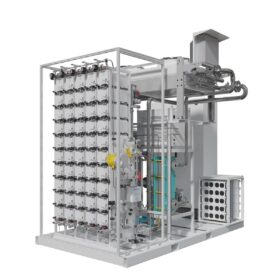
The Hydrogen Stream: Enapter secures 3 MW electrolyzer order
Enapter has secured four new orders for its AEM Nexus 1000 megawatt-class electrolyzer, while Fraunhofer IWU says it has started working on electron beam welding technology to overcome the speed limitations of laser beam scanner welding.
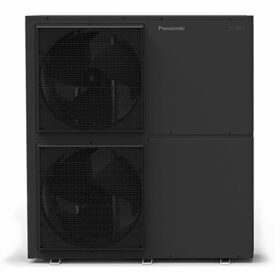
Panasonic reveals new air-to-water heat pumps
The new products are intended for commercial applications and and multi-dwelling buidlings. They have a size of 20 kW to 30 kW and use R290 as the refrigerant.

Japan unveils 2024 feed-in tariff levels for residential, commercial PV
Japan’s feed-in tariffs (FITs) for this year will range from JPY 9.5 ($0.06)/kWh to JPY 16/kWh, depending on system size. The Japanese government also says it will hold four more auctions for solar projects above 250 kW this year.
