
Morocco finally unlocks solar self‑consumption
Morocco has published the implementing decree for Law 82‑21, enabling self-producers to consume their own solar power and sell up to 20% of surplus energy back to the grid. The measure, effective 9 June 2026, sets clear tariffs and grid limits.
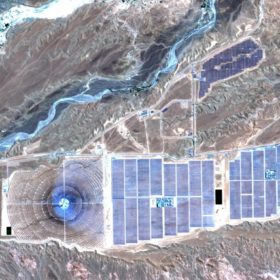
Morocco begins construction on 305 MW Noor Atlas solar program
Morocco’s state energy agency and national utility have signed power purchase agreements (PPAs) and begun construction on six Noor Atlas solar plants totaling 305 MW. The project – financed by KfW, the European Investment Bank and Bank of Africa – aims to expand renewables, support local industry and create regional jobs.

Morocco installs 204 MW of utility-scale solar in 2025
Official data from Morocco’s National Office of Electricity and Drinking Water puts the country’s cumulative utility-scale solar capacity at almost 1.3 GW, while import data suggests there could be a further 3 GW of operational solar spread across the commercial and industrial, solar pumping and residential solar markets.
Morocco sets net‑metering tariffs for high, medium‑voltage systems
The Moroccan authorities have established new net‑metering tariffs for high, medium, and extra-high voltage systems from March 1, 2026, to February 28, 2027. The low-voltage tariff for residential PV will be set later, as the current regime mainly applies to industrial and commercial solar plants.

Key takeaways from Solaire Expo Maroc
A pavilion dedicated to electric vehicles, a dominant Chinese presence and limited European representation shaped the solar trade show held Feb. 10 to 12 in Casablanca, Morocco. Local distributors warned of rising prices for Chinese solar equipment, while a booming commercial and industrial (C&I) segment, a nascent residential market, emerging storage demand and largely untapped solar potential underscored the sector’s direction.

Morocco opens tender for 1,000 km UHV transmission line
Morocco is seeking pre-qualified bidders for a 1,000 km ultra-high-voltage alternating current line to transmit about 2 GW between Boujdour and Tensift, with applications due Jan. 15, 2026.
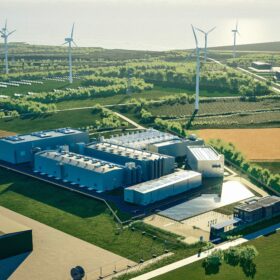
The Hydrogen Stream: EWE begins work on 320 MW hydrogen plant in Germany
EWE says construction has started on its 320 MW hydrogen plant in Germany as it seeks regulatory reforms, while Japan Suiso Energy and Kawasaki Heavy Industries have broken ground on a commercial-scale liquefied hydrogen terminal set to begin operations in 2030.
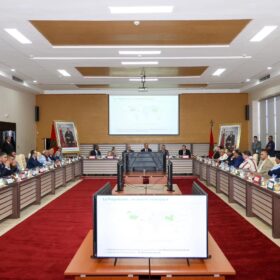
Morocco signs deal for 30,000 MT polysilicon production plant
The Moroccan Ministry of Investment, Convergence and Evaluation of Public Policies has entered into an investment agreement for a polysilicon production plant set to have an annual production capacity of 30,000 tonnes.

Morocco distributed solar potential pegged at 28.6 GW
Morocco could install up to 28.6 GW of distributed solar, producing 66.8 TWh of electricity and creating a $31 billion market, according to new research that calls for rapid regulatory action to unlock this potential.
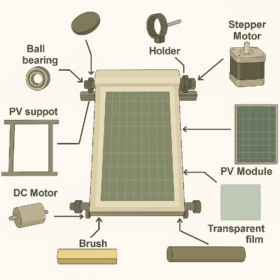
Solar panel cleaning based on rolling film, motors
Scientists in Morocco have developed a novel solar panel cleaning system designed to remove dust and bird droppings. Their prototype was built at a total cost of $386 and is ready to incorporate AI features in the future.
