
Saudi Arabia awards 3 GW of solar in sixth renewables tender round
Saudi Power Procurement Co. (SPPC) has concluded the sixth phase of the country’s National Renewable Energy Program by awarding four solar projects and one wind farm. They include the 1.4 GW Najran solar site, which has the second-lowest levelized cost of electricity (LCOE) for solar energy to date.

PV-driven desalination system for brackish water
Algerian researchers have built a single-stage solar and battery desalination system for brackish water that uses a hybrid spotted hyena optimizer and maximum power point tracking (MPPT) algorithm to improve efficiency. Simulations and real-time tests showed high performance, steady water output, and low salinity under changing solar conditions.
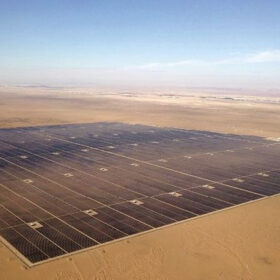
Chinese PV Industry Brief: Energy China secures 5 GW EPC deal in Saudi Arabia
Energy China has signed three EPC contracts worth $2.7 billion for 5 GW of wind and solar projects in Saudi Arabia with partners including PIF and Aramco Power.
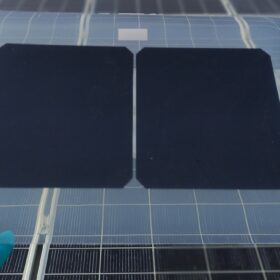
KAUST explores polymer alternatives to glass for solar panel covers
Researchers at King Abdullah University of Science and Technology (KAUST) have published a review that looks at polycarbonate sheets as an alternative to solar cover glass. Their findings indicate that this new materials have a combination of low weight, mechanical strength, optical transparency, and thermal resistance that is worthy of further investigation.

China’s SoleFiori to build 6 GW HJT solar module factory in Saudi Arabia
SoleFiori signed a deal to set up a 6 GW heterojunction (HJT) solar module plant in Saudi Arabia, supplying high-efficiency panels tailored for desert conditions.

KAUST achieves 28.7% efficiency in perovskite-perovskite-silicon tandem solar cell
An international team of researchers led by King Abdullah University of Science and Technology has fabricated a triple junction perovskite-perovskite-silicon tandem solar cell that achieved a world record efficiency for this cell architecture. The device incorporates stabilized perovskites that ensure improved performance and stability.

Saudi Arabia launches 3.1 GW solar tender
Saudi Power Procurement Co. (SPPC) has announced a request for qualification (RFQ) for 3.1 GW of solar capacity across four projects in the seventh round of Saudi Arabia’s renewable energy tender program.

KAUST, Franuhofer ISE announce 33.1%-efficient fully texturized perovskite-silicon tandem solar cell
The fully textured tandem cell achieved an open-circuit voltage of 2.01 V and an “extended” outdoor stability in the Red Sea coast, according to the researchers.

All back-contact perovskite solar cell designs at a glance
Scientists from Japan, Saudi Arabia and the United States have investigated existing back-contact perovskite solar cell architectures and have proposed a strategy to help reach commercial production.
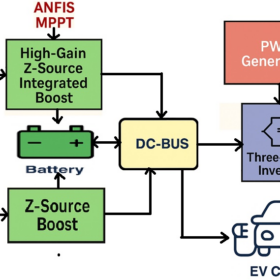
Novel MPPT technique for EV charging combined with PV, fuel cells
Scientists in India have designed a system that uses PV panels, a proton-exchange membrane fuel cell, battery storage, and a supercapacitor. It also relies on an adaptive neuro-fuzzy inference system-based MPPT that reportedly achieves an efficiency of 98.7%.
