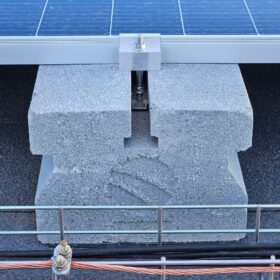
Alusín Solar launches concrete mounting system for flat rooftop PV systems
Alusín Solar has released the Picos Coplanar mounting system for flat DECK-type roofs with PVC or asphalt surfaces, eliminating the need for drilling.

Tecnalia, Vita International developing solar guardrails
Spain’s Tecnalia and Italy-based Vita International have designed a new photovoltaic guardrail, set for testing later this year on a 100-meter stretch of a highway service area between Turin and Trieste, Italy.
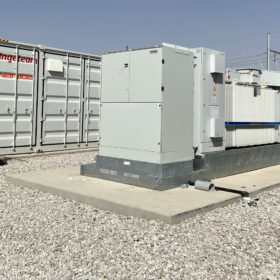
EU approves Spain’s €700m energy storage subsidy plan
The European Commission on Monday greenlit a new aid scheme to enable Spain to deploy large-scale energy storage with co-financing of up to 85%.

New way to improve accuracy of electricity price forecasts
Researchers at the European Commission’s Joint Research Centre (JRC) have developed a new filtering technique to improve electricity price forecasts by refining historical price data before applying predictive models.
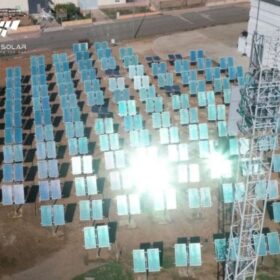
Spanish startup offers new PV-CPS system integrating energy storage
Spanish startup BlueSolar has unveiled a patented PV-CSP system that combines hybrid panels and thermal storage to deliver uninterrupted solar power. The technology uses optical light filters to generate electricity and capture heat for storage or steam, targeting large-scale plants in high-solar-resource markets.

How to identify interruption of ribbons in solar modules
Scientists in Spain have investigated the total or partial interruptions of ribbons that connect solar cells in modules and have proposed a classification based on their type and location.

New tool digitizes management of energy communities
CIRCE presents Communit-e, a software program to support the work of community managers, streamline management time and improve transparency among members.

Renewables accounted for 54.1% of total electricity in Spain in February
The main source of production for the month was nuclear (22.1%), followed by hydroelectric (20.2%), wind (17.3%), photovoltaic (14%) and combined cycle (13.8%). In addition, 237 GWh have been supplied to storage facilities and 1,214 GWh have been scheduled to export energy to our neighbouring countries.
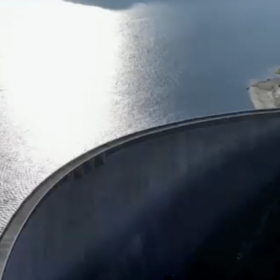
Iberdrola switches on 210 GWh Spanish pumped hydro-battery project
Iberdrola Spain has started commissioning the 225 MW Valdecañas pumped hydro energy storage (PHES) plant, which is hybridized with a 15 MW/7.5 MWh battery energy storage system.
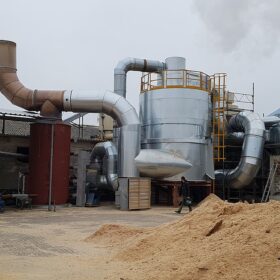
Energy storage system powered by forest waste retains 60% capacity after 10,000 cycles
Researchers in Spain used electrodes derived from wood biomass discarded by sawmills as waste to create a hybrid system combining batteries and supercapacitors.
