Weekend Read: Much more than Goodenough
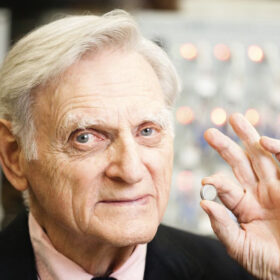
The world would have been a different place today had John Goodenough accepted the Shah of Iran’s $7 million offer, in 1974, to carry out solar research. Instead, he secured a job as the head of inorganic chemistry at the University of Oxford. During his tenure, he made a lithium-ion battery discovery that would affect the lives of almost everyone.
The Hydrogen Stream: Germany to use hydrogen ‘in all sectors’
The German authorities have announced plans to double domestic electrolysis capacity to 10 GW by 2030, BloombergNEF has reported that green hydrogen became competitive with gray hydrogen earlier than expected, and Chinese researchers have presented new research on microbial hydrogen production.
Scotland greenlights 600 MW pumped hydro project
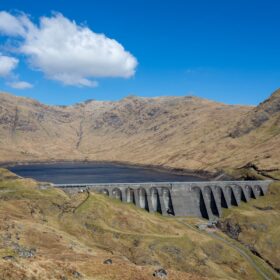
Drax Group said it will expand the pumped hydro storage capacity of the Cruachan Power Station by another 600 MW to 1,044 MW. However, the project will require greater policy support.

UK’s cumulative installed PV capacity hits 15.13 GW
The United Kingdom’s cumulative installed solar capacity reached 15.13 GW by the end of May, with 480 MW added between January and May 2023.
UK coal-fired power plant site to host 1,040 MW/ 2,080 MWh battery
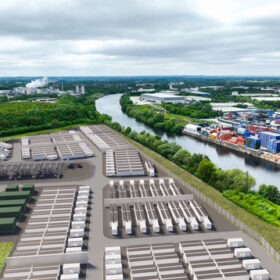
Independent energy infrastructure developer Carlton Power has secured planning consent for a 1,040 MW/ 2,080 MWh battery energy storage system (BESS). The project is expected to strengthen the resilience of the energy system in northwestern England.
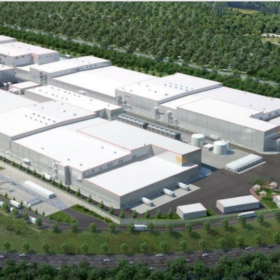
Tata Group to invest $5 billion in 40 GWh UK battery fab
Tata Group says it will build a 40 GWh battery factory in the United Kingdom to produce batteries for Jaguar Land Rover (JLR) and other electric-vehicle manufacturers in the Great Britain and Europe.
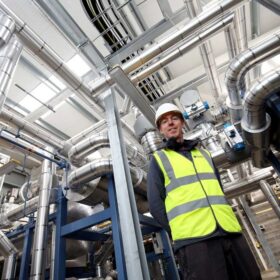
European utilities turning to large heat pumps
Utilities increasingly recognize heat pumps as a critical technology for heat decarbonization. They are deploying multi-megawatt systems in different parts of Europe to simultaneously serve multiple users and offer new avenues for the decarbonization of buildings.
The Hydrogen Stream: EU, Argentina, Chile, Uruguay to partner on hydrogen
The European Commission and the European Investment Bank have agreed to collaborate with Argentina, Chile and Uruguay on hydrogen, while Masdar, Mitsubishi and Inpex have said that they will use green hydrogen to produce e-methane and polypropylene.
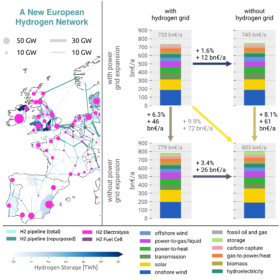
The Hydrogen Stream: Hydrogen grid could cut Europe’s energy costs by 3.4%
German researchers say gas-grid retrofits for hydrogen transport, combined with power grid expansion, could decarbonize Europe’s economy, while S&P says the global ammonia trade could expand by nearly 10 times by 2050.
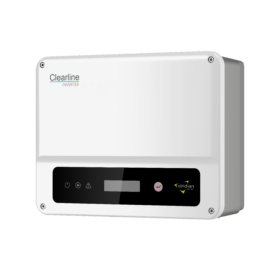
Viridian Solar presents new residential inverters
Viridian offers five versions of its new residential inverters, with power outputs ranging from 1 kW to 3 kW and an efficiency ranging from 97.2% and 97.6%. The European efficiency is 96.4% to 97.2%.
