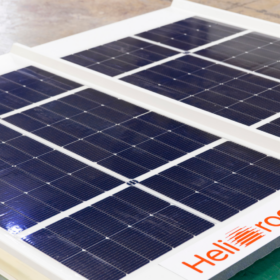
ArcelorMittal starts BIPV module production in France
ArcelorMittal has started producing its Helioroof building-integrated PV modules in France. The steelmaker says the system aims to simplify energy retrofits for commercial and industrial roofs.
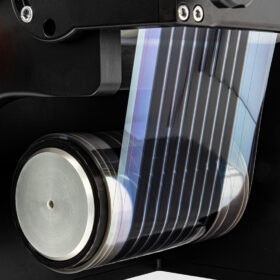
Market trust key for perovskite solar commercialization
In a new perspective paper, researchers from Dresden University of Technology and Denmark’s InfinityPV analyzed scientific research and more than 100 companies involved in organic PV and perovskite solar cell manufacturing. Their findings show that the commercialization of these technologies depends on the PV industry’s ability to increase financial transparency.

German railway areas have 37.6 GW of solar potential
Fraunhofer Institute for Solar Energy Systems (ISE) says PV systems within 2 km of Germany’s railway substations could generate more than four times the network’s annual power demand.
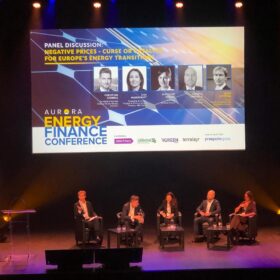
Negative pricing reshapes solar finance as investors turn to storage for flexibility in Europe
Growing price volatility and the rise of negative pricing across power markets are pushing lenders and developers to rethink risk and revenue structures, focusing on asset flexibility and sustainable business models for storage, including co-location.
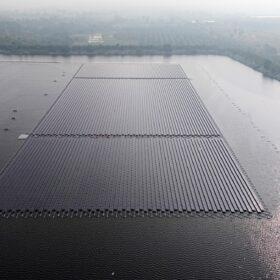
Ciel & Terre unveils new honeycomb structure for floating PV
The new Fusio floating structure features a triangular design and is said to be particularly suited to markets such as India and Southeast Asia. Tilt angles can be configured at either 5° or 12°.
Swedish organic PV manufacturer secures financial boost
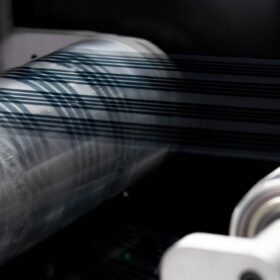
Indoor PV specialist Epishine has received direct funding of SEK 33.7 million ($3.46 million) from the Swedish Energy Agency towards expansion of its roll-to-roll production line.

France cuts feed-in tariffs for solar up to 100 kW
The French Energy Regulatory Commission (CRE) has lowered feed-in tariffs by up to 16% for rooftop solar systems between 10 kW and 100 kW, while keeping smaller system rates unchanged.
Vertical floating PV plant comes online in Germany
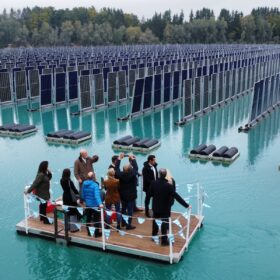
Sinn Power has deployed a 1.8 MW vertical solar array on a quarry lake in the Bavarian municipality of Gilching. The company highlights the ecological benefits of the vertical system configuration and, perhaps surprisingly, its high resistance to storms.
Battery storage boosts viability of south-facing solar facades
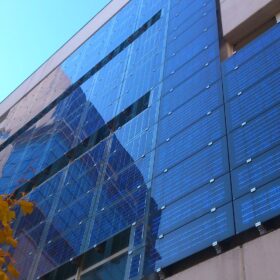
Researchers in Germany have examined how battery storage could help façade PV systems move beyond their niche market by 2030. Their findings show that a large majority of south-oriented façades in Europe could be equipped with vertical solar arrays combined with batteries.

The Hydrogen Stream: Australia opens second Hydrogen Headstart round
The Australian government has aunched the second round of its Hydrogen Headstart program to provide revenue support for large-scale renewable hydrogen projects, while the UK government is seeking industry input on rules for hydrogen-to-power participation in its capacity market.
