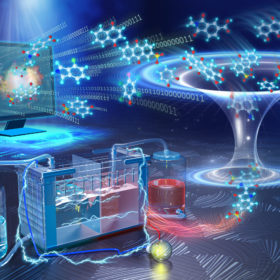
Scientists identify molecules for potential use in redox flow batteries
Scientists at the Dutch Institute for Fundamental Energy Research (DIFFER) have set up a database of 31,618 molecules that could potentially be used in future redox flow batteries. They used artificial intelligence and supercomputers to identify the properties of the molecules.
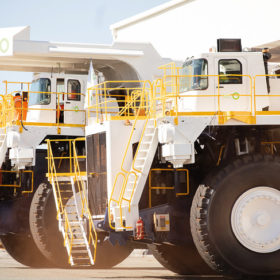
Weekend read: Shining magnate
Mining magnate Andrew “Twiggy” Forrest is the founder and executive chair of Australian iron ore producer Fortescue Metals Group. The company has announced an ambitious $6.2 billion decarbonization strategy and its Fortescue Future Industries subsidiary has rapidly become a global player in green hydrogen, along with a host of other energy transition technologies. Whether it is pushing to decarbonize mining, hashing out headline-making green energy deals, or using the popular “Rick and Morty” cartoon to educate people about the potential of green hydrogen, Fortescue and its shining magnate are talking the talk. But can they walk the walk? Blake Matich reports.
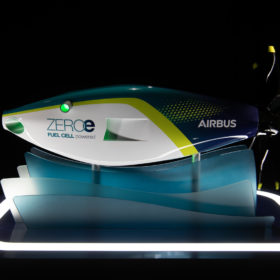
The Hydrogen Stream: Airbus, Honda bet on hydrogen-powered fuel cells
Airbus sees hydrogen-powered fuel cell engines as a potential solution for its zero-emissions aircraft, which will go service by 2035. Meanwhile, Honda, meanwhile, has announced plans to produce fuel cell electric vehicles in the United States from 2024.
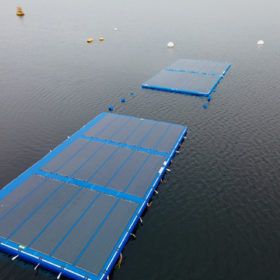
Dutch developer secures funds for flexible floating solar pilot in North Sea
Bluewater Energy Services has won a grant from the Dutch government to build a flexible floating solar demonstration project in the North Sea. The system uses flexible thin-film PV modules and flexible floaters that move with the waves.
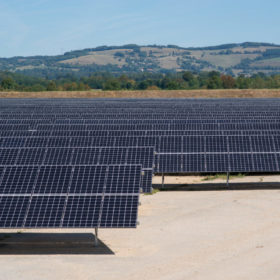
France installed 1.71 GW of solar in January-September period
France’s cumulative installed PV capacity reached 15.8 GW at the end of September.

Spain provides financial support for 600 MW of utility-scale storage
The Spanish government say it will finance five hybrid battery energy storage projects, with a cumulative installed capacity of at least 600 MW. Each project can secure up to €15 million ($15.68 million) in funding.

Big solar already pulling its weight on emission reduction – especially in Chile
Following a disappointing COP27 climate change summit in November, solar industry veteran Philip Wolfe reviews the contribution utility-scale PV is starting to make to emissions reduction.
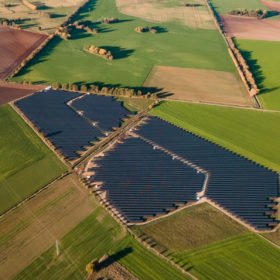
Germany installed 706.5 MW of solar in October
Germany added 6.1 GW of new PV systems in the first 10 months of 2022.
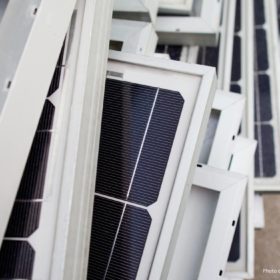
Itochu to start recycling solar modules
Japan’s Itochu has announced a new tie-up with France’s Rosi Solar, which develops tech to recover and recycle high-purity silver, copper and silicon from solar modules.

Solar panels with discarded ‘black gold’ from wafer production
A European consortium is trying to reuse discarded silicon powder from ingot and wafer manufacturing in several industrial applications, including PV production. The group is now identifying ways to decontaminate such materials.
