
Where does solar stand in Trump’s ‘all the above’ energy policy?
Wind and electric vehicles have come under the crosshairs for the Trump administration, while solar has been relatively unscathed – so far.
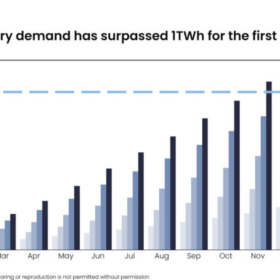
Annual lithium-ion demand surpasses 1 TWh for first time
The big milestone comes on the back of a record month for electric vehicle sales and strong battery energy storage system (BESS) deployment. However, EV demand remains far behind BESS with the latter’s impressive growth reaching a year-on-year increase of 175% and cumulative 19.4 GWh deployed in November alone.

EV charging microgrid project powered by lead batteries
The developers of the first-of-its-kind lead battery-powered EV charging station, currently located in Missouri, say they plan to roll it out across the US.

California EV maker unveils solar car with 64 km of daily, charge-free range
Aptera Motors, a California-based solar electric vehicle maker, has demonstrated its first production-intent design vehicle. It says it will offer up to 40 miles (64 km) of daily range from its onboard solar cells.
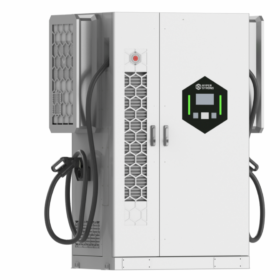
HyperStrong’s 2-in-1 EV charger, battery storage system
The charging and storage all-in-one machine HyperCube Pro was developed in response to growing demand for fast-charging EV infrastructure and based on solid-state lithium iron phosphate battery cells developed in-house.
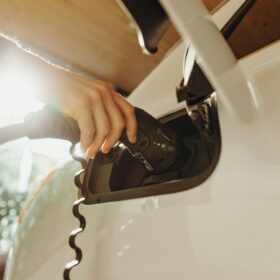
Standalone PV-hydrogen-battery system for EV charging
Researchers in Pakistan have tested several configurations of an offgrid PV-hydrogen system intended to power EV chargers. The system achieved the lowest levelized cost of electricity when it was combined with battery storage.

California hits new milestone with EV chargers
California installed 24,202 electric-vehicle chargers in the first half of 2024, bringing the total to more than 150,000.
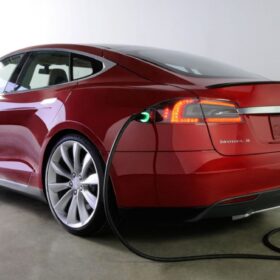
UK analyst finds incentives, education key to flexible EV tariff adoption
As a new phase of government-backed flexibility tariff trials gets underway in the United Kingdom, LCP delta analyst Shaz Shamim tells pv magazine how phase-one research revealed consumers can be convinced to hand over control when cost savings are combined with better understanding.
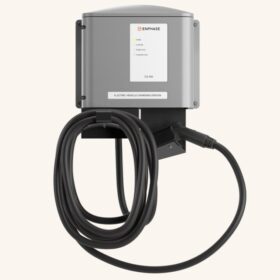
Enphase Energy releases EV charger for commercial fleets
Enphase Energy has developed an electric vehicle (EV) charger for commercial fleets. The CS-100 provides up to 19.2 kW of continuous power output and allows fleet operators to set up charging schedules using the Enphase proprietary COSMOS interface.
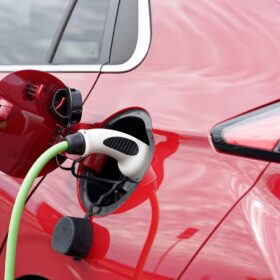
V2G tech can provide outage support, claim Australian researchers
Researchers at the Australian National University (ANU), Canberra, have shown that their response to a February 2024 grid emergency provides evidence that electric vehicles (EVs) equipped with vehicle-to-grid (V2G) systems could strengthen the grid during blackouts, marking a global first for such research.
