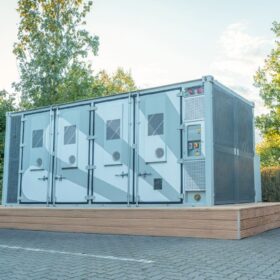
Europe’s largest sodium-ion battery installation goes live
Switzerland’s Phenogy has launched a megawatt-hour-scale sodium ion energy storage system at a commercial site near Bremen Airport in northern Germany. With this project, the Swiss manufacturer is making its debut on the European energy storage scene, backed by ambitions to develop fully vertically integrated local manufacturing.
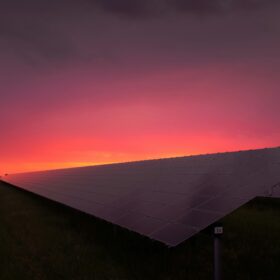
Renewables overbuilding, proactive curtailment can reduce Europe’s energy system costs
New research from the Netherlands showed that renewables and short-term storage can meet around 92.5% of Europe’s electricity demand in future energy scenarios, with the remaining 7.5% being satisfied by green hydrogen. The scientists considered Europe as fully self-sufficient with zero import-export of power or hydrogen, with each of the 37 countries included in the modeling having a self-sufficiency rate of at least 80%.
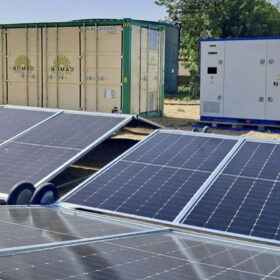
Spanish startup offers portable solar-plus-storage generators for irrigation
Spanish startup Nomad Solar Energy and Full&fast have deployed a portable solar-plus-storage system at a Madrid farm to provide off-grid power for irrigation.
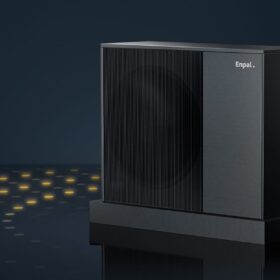
Enpal unveils residential heat pump for large heating loads
The German company is introducing its own heat pump with a heating output of up to 16 kW and a maximum flow temperature of 80 C. The system is designed to meet rising demand in large single-family homes and unrenovated existing buildings.
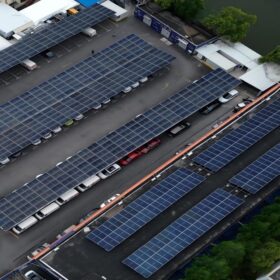
Optimization strategy for PV-powered EV charging stations relying on V2G
Scientists in China have created an optimization technique for an electric vehicle charging station that uses PV, battery storage, and a vehicle-to-grid operation. Considering the uncertainty of PV generation and the randomness of EV load, the system uses two-level optimization, day-ahead and intra-day.

Brookfield, Solarvest partner on 1.5 GW of solar-plus-storage in Malaysia
The two parties have signed a joint investment framework agreement to develop, construct and operate 1.5 GW worth of solar-plus-storage projects in Malaysia over the next three to five years.
Seven projects pulled from EU hydrogen fund
The projects, equivalent to 1.88 GW of electrolyzer capacity, were withdrawn after choosing not to continue with the agreement procedure or for being unable to provide a signed completion guarantee. As a result, ten hydrogen projects representing 774 MW in capacity from the reserve list have been invited to prepare grant agreements.
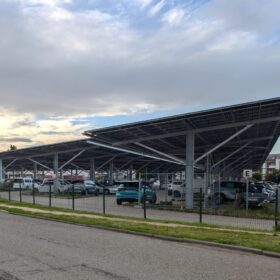
Stochastic optimization for PV-powered EV charging stations
Scientists have developed a new optimization approach that combines both day-ahead optimization and real-time optimization to improve operations of PV-driven EV charging stations. The framework is based on the autoregressive moving average and the Latin hypercube sampling models.
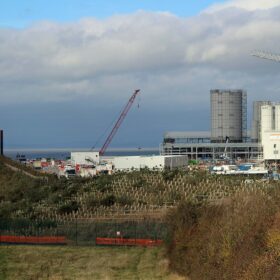
Record nuclear power output in 2024 irrelevant to global energy landscape
Nuclear plants generated a record amount of power in 2024, surpassing record set in 2006, but industry optimism is not backed by economic data or investment, says the World Nuclear Industry Status Report 2025.
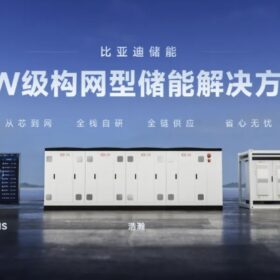
BYD unveils 14.5 MWh storage system, world’s largest yet
China’s EV giant has unveiled the 14.5 MWh DC “Haohan” single-unit DC block with record-breaking capacity to challenge next-generation energy storage market.
