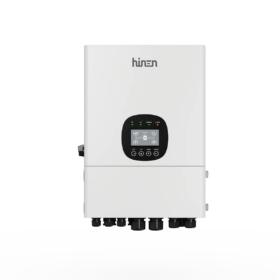
Hinen launches 15 kW three-phase hybrid inverter
The Chinese manufacturer said its 15 kW three-phase low-voltage hybrid inverter is paired with the stackable BP5000 5 kWh battery supporting up to 120 kWh. It features three MPPTs, 150% oversized PV input, and smart load management for optimized self-consumption.
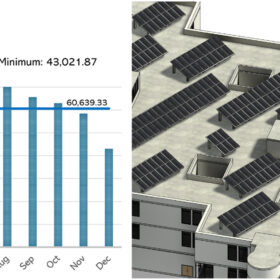
The impact of azimuth angles on PV power production in Saudi Arabia
Researchers in Saudi Arabia conducted a year-long simulation of fixed-tilt PV panels at different azimuth angles, finding that south-facing panels (180°) maximize energy production, while up to 45° eastward shifts cause minimal losses.

The new rationale of the EU PV Market
In its first monthly column for pv magazine, the Becquerel Institute explains how solar PV continues its global expansion despite political uncertainty and market turbulence. In Europe, 2025 was a record year — but the underlying dynamics are becoming increasingly complex.
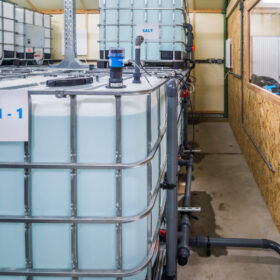
Long-duration storage as an antidote to grid congestion, renewables curtailment
RenewaFLEXNL, a three-year Dutch initiative led by TNO, aims to accelerate long‑duration energy storage (8–100 h) to reduce grid congestion and better integrate renewable energy. pv magazine spoke with the project coordinator, Iraxte Gonzalez Aparicio, about diverse storage technologies, real-world applications, regulatory guidance, and energy management system tools to support large-scale solar‑plus‑storage deployment in the Netherlands and beyond.

Comparing safety profiles of lithium-ion, sodium-ion and solid-state batteries
New research finds that battery safety rankings are not universal but highly dependent on application scenarios, and shows that LFP batteries can emit high levels of hydrogen fluoride, challenging their reputation as the “safest” chemistry.

French startup launches app to boost collective self-consumption
French startup Jane Energie has introduced a software platform to automate and manage collective self-consumption projects, targeting 100 kWp to 500 kWp installations as the segment moves from feed-in tariffs toward shared local consumption models.
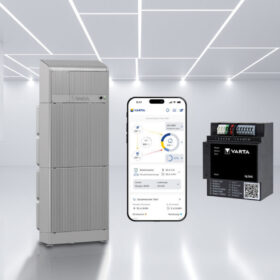
Varta unveils residential battery with AI-driven energy management
The Germany battery manufacturer is expanding its portfolio with a modularly scalable LFP storage solution featuring a new energy management system. The new product comes with the company’s proprietary “Varta.iq” software, which is designed to detect consumption anomalies, integrate dynamic electricity tariffs, and enable bidirectional charging.
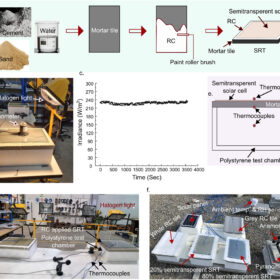
New reflective coating increases BIPV power output by 11%
Australian researchers developed a low-cost reflective coating for semi-transparent solar roof tiles that lowers surface temperatures by up to 20 C and boosts power output by up to 11.7%. Simulations across five global cities showed energy savings of up to 5.85%, highlighting the coating’s strong potential for improving both building cooling efficiency and solar performance in BIPV systems.
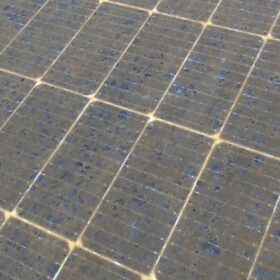
Chemitek offers solution for drone-based cleaning of agrivoltaics
The Portuguese company said its new Drone AgroPV Cleaning Agent is scheduled for release in June. It has a safe formulation for crops and soil.
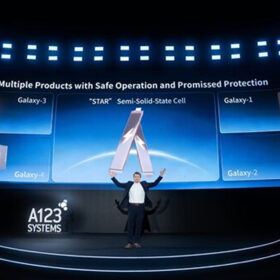
Wanxiang A123 launches immersion-cooled semi-solid-state energy storage solutions
By combining semi-solid-state battery technology with immersion cooling, the new battery cells and energy storage solutions from Wanxiang A123 Systems Corp. exhibit both robust thermal safety and strong economic performance.
