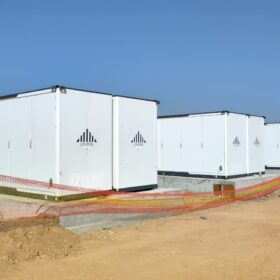
Greece announces downsized auction for battery storage in coal regions
The Greek government decided to auction 100 MW less capacity than initially sought and to offer more money to the awarded projects than expected.

EU-funded project seeks set up pilot production of large-area perovskite PV modules
The EU-funded Laperitivo project aims for 22% efficiency in 900 cm² opaque perovskite modules and 20% efficiency in semi-transparent ones. The project partners include imec, Fraunhofer ISE, TotalEnergies, and EDF.
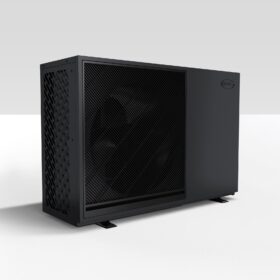
Grant launches air source heat pump for residential applications
The novel propane heat pump has a coefficient of performance of up to 4.9 and can reportedly achieve a flow temperature of up to 55 C.
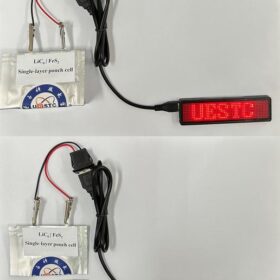
Researchers develop lithium-sulfur battery that can be cut, folded
By coating the iron sulfide cathodes in polymers, a research team was able to create transition-metal sulfide-based lithium batteries with stable cycling and high safety. After 300 cycles, a lithium carbide iron disulfide pouch cell retained 72.0% capacity with no capacity degradation after 100 cycles.
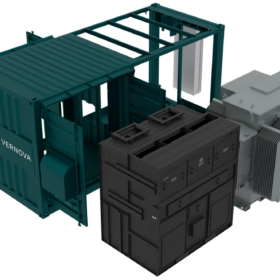
GE Vernova releases 2,000 V (DC) utility-scale inverter
GE Vernova has developed a 2,000 V (DC) utility-scale inverter, to be used in a North American pilot operation starting in early 2025. The inverter offers up to 6.0 MVA of output power.

Dandelion unveils residential geothermal heat pump with coefficient of performance of 5.2
The novel heat pump can reportedly heat air to up to 49 C. Its full-load heating capacity is of up to 63,000 Btu/hour.

Most home battery storage systems meet warranty claims, new research finds
It took eight years of field measurements for researchers at the RWTH Aachen University in Germany to estimate the usable capacity of home battery energy storage systems and develop a dataset covering 106 system years and 14 billion datapoints. Their key finding was that home battery systems lose about two to three percentage points of usable capacity per year on average, meaning good news for the industry as most warranties in the market can be met with the implementation of capacity reserves.
Banking on batteries in Chile
The Chilean solar market is booming but as curtailment grows, a hybrid approach to generation is gaining ground. Storage project announcements are coming thick and fast as co-location with wind turbines offers cost efficiency and a smoother generation profile. Meanwhile, new capacity mechanism rules could take Chile one step closer to runaway battery growth.
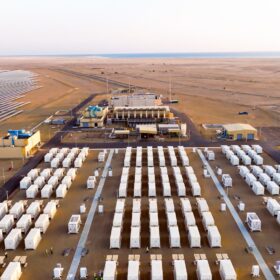
Huawei unveils world’s largest microgrid
China’s Huawei has built a 400 MW/1.3 GWh solar-plus-storage off-grid facility in Red Sea New City, Saudi Arabia.
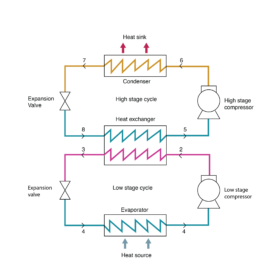
How to increase coefficient of performance in two-stage cascade heat pumps
A group of researchers in Thailand outlined a new methodology to identify the optimal temperature in two-stage cascade heat pumps using non-azeotropic refrigerants. Through their analysis, the scientists found that the coefficient of performance for simultaneous heating and cooling is affected by the pinch point temperature at the cascade heat exchanger, with lower temperature levels being responsible for a higher COP.
