Cybersecurity guidelines for smart inverters
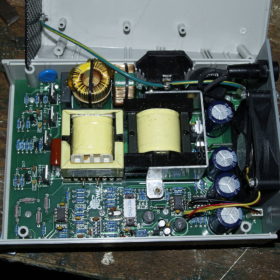
The National Institute of Standards and Technology has flagged a cybersecurity risk for smart inverters, and is developing guidelines to prevent cyberattacks.
Deye releases residential hybrid inverter
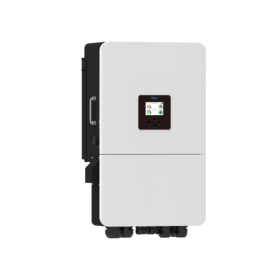
Chinese manufacturer Deye says its new three-phase residential hybrid inverter system has a rated output power ranging from 14 kW to 20 kW.
Enphase begins shipping US-made microinverters for commercial projects
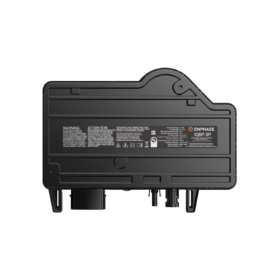
Enphase says that it has started shipping US-made IQ8P-3P commercial microinverters, supporting up to 480 W of peak output power and compatible with solar modules up to 640 W.
TBEA launches new 1,500 V string inverter
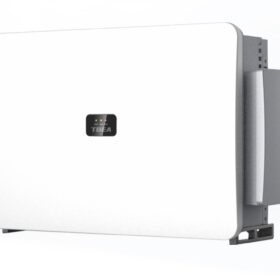
TBEA has developed a new 1,500 V string inverter with a maximum efficiency of 99.02%, maximum power point tracking (MPPT), a maximum input current of 65 A, and a maximum short circuit current of 115 A.
CSIRO partners with Google to prototype grid-forming inverters
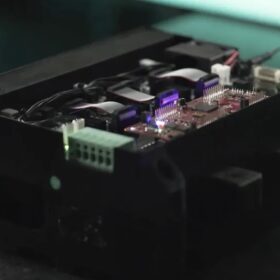
Scientists from Australia’s national science agency and the electricity research and development arm of Google have developed a new ‘smart’ inverter they claim is almost twice as fast and about 50% more efficient than existing commercial inverters.

AEG unveils hybrid inverters for high-voltage PV systems
The new three-phase hybrid inverter series includes five versions with power ratings of 6 kW to 15 kW. They feature efficiencies of up to 98.2% and a maximum input voltage of 1,000 V.
New pulse width modulation tech to reduce switching losses in three-phase inverters
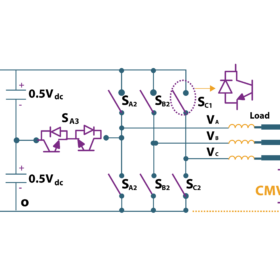
Scientists in the Emirates have conceived a new space vector pulse width modulation method that reportedly reduces switching losses and increase efficiency in three-phase photovoltaic inverters. The proposed technique was found to have a higher efficiency, while providng lower common-mode voltage, leakage current and total harmonic distortion compared to traditional pulse width modulation approaches.

Yotta Energy launches ‘panel-level storage’ package for C&I solar
US storage and inverter specialist Yotta Energy says its new package has several advantages compared to conventional C&I solar storage solutions. For example, the design cuts out the need for a dedicated room or separate space for the battery racks and it reportedly keeps batteries cool, passively maintaining an ideal working temperature range, between 21 C and 38 C.

Hoymiles launches AC-coupled battery for balcony PV systems
The Chinese company says its new product has a storage capacity of 2,240 Wh and an expected lifespan of 6,000 cycles.

Israel to provide incentives for hybrid solar inverters
Israel’s Ministry of Energy says it will exempt hybrid solar inverters from purchase tax and customs duties. It claims that these policy mechanisms will help during energy emergencies.
