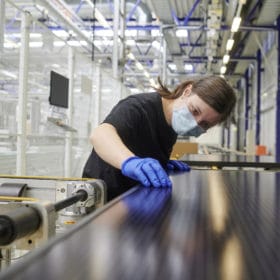
Meyer Burger unveils 400 W heterojunction solar module
The solar module will be available in three versions – white, black, and glass-glass. The products have an output of up to 400 W, but when the bifacial effect is optimally used, the output of the glass-glass module can reach up to 430 W. Both the white and black modules weigh less than 20 kg
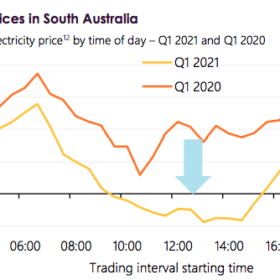
South Australia sets record as electricity prices consistently plunge below zero
Rooftop solar has caused South Australia’s average daytime prices to consistently fall below zero for the first time in the history of the National Electricity Market, the Australian Energy Market Operator said in its new quarterly report this week.
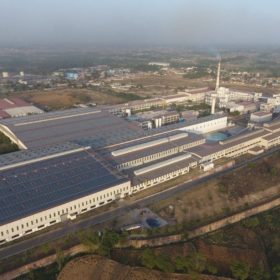
Indian manufacturer to set up new solar glass factory
Gold Plus Glass Industry, an Indian float glass manufacturer, has told pv magazine that it plans to set up a new solar glass factory with a capacity of 300 tons per day. The plant, to be built in southern India, will be operational by September 2023.
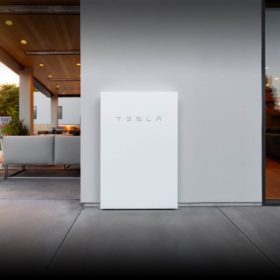
Tesla touts the market strength of its Powerwall energy storage product
In an earnings call, the company said that storage deployments grew 71% YoY and solar installations were its strongest in 2.5 years.
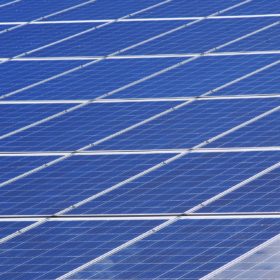
CS Energy, Goldman Sachs bring more than 200 MW of PV to New York
CS Energy and a unit of Goldman Sachs have said that their eight-project portfolio will be one of the first utility-scale solar portfolios in upstate New York, once the projects reach commercial operation in late 2021.
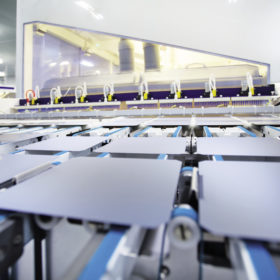
Chinese PV Industry Brief: Polysilicon prices keep rising, NEA says newly deployed PV reached 5.33 GW in Q1
Polysilicon prices rose to RMB145-150/kg this week, prompting a varied response from the major wafer suppliers. Longi won a tender to supply modules for a 100 MW agrivoltaic project held by Hubei Energy Group and GCL-Poly sold off a further 127 MW of solar project capacity to two state-owned enterprises.

The smarter E Europe postponed to October
Due to the Covid-19 crisis the organizers of Intersolar and ees Europe, the largest photovoltaic and storage trade fairs in Europe, have decided to postpone it again. The Smarter E Europe will now take place from October 6th to 8th, 2021. However, the various awards will be presented digitally in July.
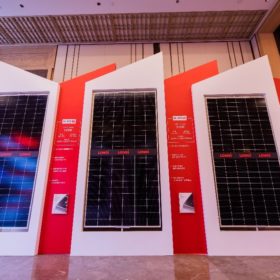
Longi unveils two PV modules for distributed generation
The two new products will be part of the Hi-MO4m panel series for rooftop applications. Their efficiency ranges from 19.2% to 21.2%.
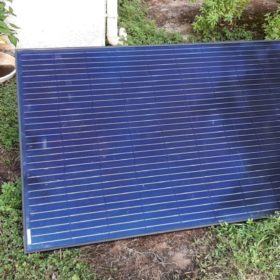
Solar kit for gardens and balconies, from France
French start-up Ekwateur is offering a solar kit consisting of a 330 W panel, a micro-inverter, a metallic structure, a monitoring sensor, and a few cables.
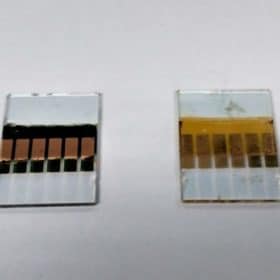
Solid-state solar cells based on metal-organic framework nanomaterials
Spanish scientists have fabricated solid-state PV cells with two different porous nanomaterials. Although low in terms of efficiency, one of the cells built with the MIL-125(Ti) metal-organic framework nanomaterial exhibited better photovoltaic performance than similar devices.
