
Solar water heater to maximize self-consumption
French module manufacturer Systovi has developed a smart water heater that can forecast the weather, store surplus green electricity, and return it in the form of hot water, according to household needs.
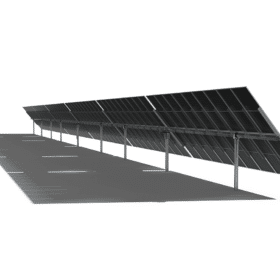
PVH launches tracker for high-power modules
The new solar tracker from PVH was specifically designed to be compatible with large-format modules and was developed in static and aeroelastic wind tunnels.
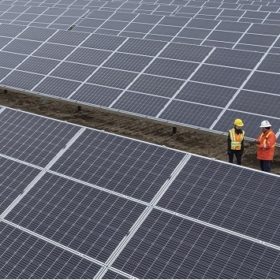
Using optical film to concentrate light in large-scale PV
The approach taken at a 13.7 MW Canadian solar park redirects and concentrates otherwise discarded light onto the PV cells.

Uzbek government agrees to buy power from 200 MW solar plant
The solar park is being planned by UAE-based Phanes Group, in Nurata, in the Navoi region. It will sell electricity at a fixed rate over a 25-year period.
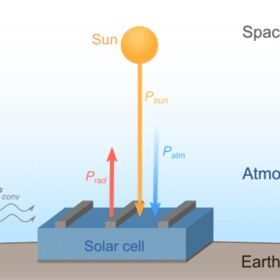
Cooling PV modules with radiative sky cooling
French scientists have proposed the use of radiative sky cooling as a passive cooling technique to cut PV module temperatures by 10 C. They claim the method could improve performance by more than 5 W/m2.
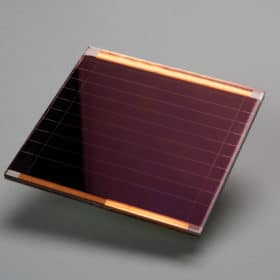
UNIST, EPFL claim 25.6% efficiency world record for perovskite solar cell
Scientists have set a new efficiency record for a single-junction perovskite solar cell at 25.6%. The cell additionally showed operational stability for 450 hours, and intense electroluminescence with external quantum efficiencies of more than 10%.
Australian manufacturer shares excess PV generation with staff
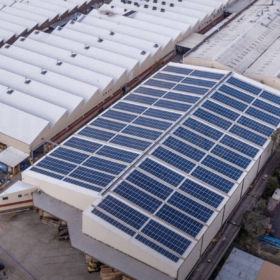
Hunter Douglas, a blinds and awnings manufacturer, will use the Enosi Powertracer platform to direct its oversupply of rooftop solar to its workforce.

Rooftop solar, storage and EVs in India
The combination of rooftop solar and storage is a big opportunity. A new report highlights Australia – a nation with the world’s highest per capita rooftop PV capacity – as a guide for Indian policymakers.

New design for antireflective coating in multijunction solar cells
Scientists in Madrid investigated the use of antireflective coatings in multijunction solar cells, drawing several conclusions that could further improve the efficiency of these cells. Their approach could improve on current antireflective coatings, particularly for high-efficiency multijunction cells, using methods and materials already proven in mass production.
Monograin layer solar cell with 6.4% efficiency
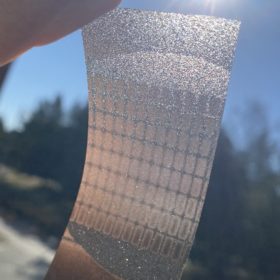
The lightweight and flexible cell was built by Estonian researchers with microcrystalline powders. The device is claimed to be the most efficient solar cell fabricated with a semiconductor compound known as Cu2CdGe(SxSe1−x)4.
