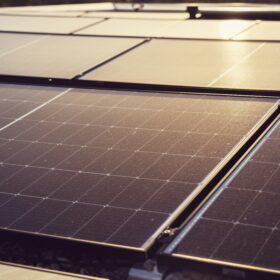
Romanian organization proposes new prosumer model for apartments
The Romanian Association of Energy Prosumers and Communities (APCE) is urging the government to introduce a new prosumer model that allows apartment residents to benefit from surplus solar energy generated by rooftop systems.
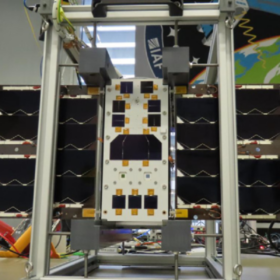
Triple-junction metal wrap through solar cells tested in space
A team of German researchers has developed a miniaturized solar cell experiment for nanosatellites. It was used to test samples of new mutlijunction solar cells developed by Azur Space, including novel triple-junction metal wrap through solar cells.

EU escalates infringement procedures over energy permit laws
The European Commission has launched legal action against eight EU member states for failing to transpose its revised renewable energy directive into national law.

Kazakhstan to auction 90 MW of solar this year
Kazakhstan’s Ministry of Energy has scheduled four solar auctions in June 2025, offering 90 MW of combined capacity.
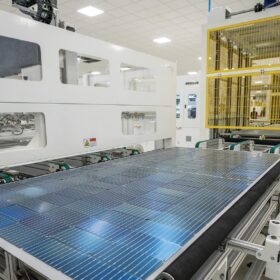
Grew Solar to set up 3 GW ingot-module factory in India
Grew Solar says its new factory in the Indian state of Madhya Pradesh will produce 3 GW of ingots, wafers, cells and modules per year.
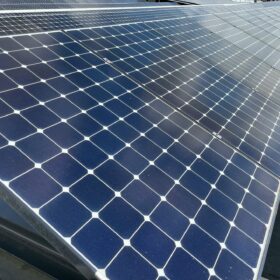
Eskom calls for registration of all grid-tied solar installations
South African utility Eskom is urging consumers with grid-tied rooftop solar to register their systems and integrate them with the national grid, waiving registration fees until March 2026. Off-grid installations must still prove they operate independently.
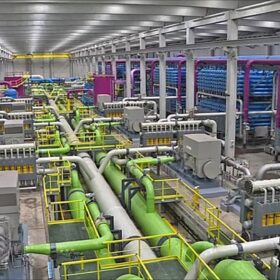
Powering seawater desalination plants with photovoltaics
A German research team has investigated the feasibility of a large-scale PV-powered seawater reverse osmosis desalination plant in Jordan and has found that keeping the concentrate flow constant is the most appropriate desalination operating mode.

The impact of impurity concentrations in gallium-doped p-type silicon ingots
The University of Konstanz and Chinese panel maker Longi have assessed the impact of gettering on LeTID in industrial Czochralski grown gallium-doped p-type silicon ingots and have found that defect density depends on impurity concentrations in the melt, which are observed in the case of interstitial iron concentrations.

China to switch from FITs to market-oriented renewables pricing
China will replace its feed-in tariff (FIT) system with a fully market-driven renewable energy pricing model by June 2025, shifting wind and solar projects to competitive bidding and market transactions. The reform aims to enhance competition but raises uncertainty over future returns for investors.
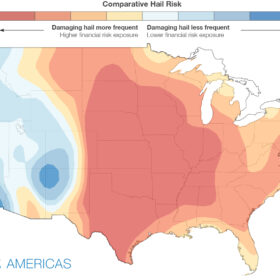
Atlas details economic risks of hail damage to US solar sites
VDE Americas’ new hail risk atlas, now available for use on the Esri ArcGIS platform, can compare and evaluate the site-specific hail risk of current and future solar projects across the United States.
