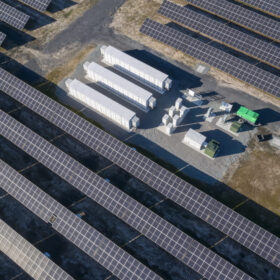
Solar to reach ‘unassailable position’ as cheapest electricity source, says DNV
Solar’s levelized cost of electricity will reach $30/MWh in 2050, as global capacity surges, said DNV.
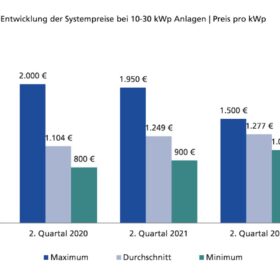
Germany’s average residential PV prices rose by 10% to €1,557/kW in Q2
According to EUPD Research figures, PV system prices for single-family homes in Germany rose slightly in the second quarter of 2023. Despite falling module prices, analysts do not expect costs to fall significantly in the coming months. Prices also depend heavily on installation context, component selection, and region, which is why price comparisons with average figures, such as those used by Enpal in emails to private households, are not particularly meaningful.
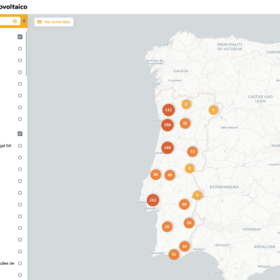
New interactive map of PV projects in Portugal
Observatório Fotovoltaico is mapping PV projects across Portugal, with information on installation size, year of commissioning, exploration type, and developer. The free tool already includes around 1,000 projects, corresponding to 60% of the country’s total installed capacity.

Protecting solar cells from UV light
Scientists in France tested the effectiveness of various encapsulant materials, used to laminate solar cells into modules, at protecting cells and other components from damage caused by ultraviolet (UV) light. Their findings show that encapsulants with additives specifically designed to absorb UV light tend to turn yellow over time, which can contribute to various other problems with performance.
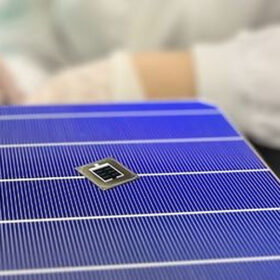
All solar cell efficiencies at a glance – updated
The research group led by Professor Martin Green has published Version 62 of the solar cell efficiency tables. There are 21 new results reported in the new version, a record number for the Tables.
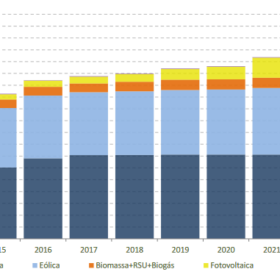
Portugal’s January-April PV installations hit 118 MW
Despite a slow start to the year, BloombergNEF expects Portugal to install another 1,363 MW of solar by the end of 2023. The likelihood of that scenario seems to come down to how quickly projects from the record-breaking 2019-20 solar auctions go online, if they do so at all.
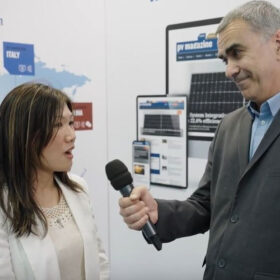
Solar Leaders at Intersolar 2023: ‘It could be a difficult time going forward for solar module makers’
In the second interview of a series held at Intersolar 2023, pv magazine spoke with Karen Tang, Director – Editorial Lead Europe at Singapore-based market research company OPIS, about current price trends in the industry. She said solar panels may soon be bought at an average of $0.185/W but she also revealed that offers under $0.15/W are now becoming more frequent. Furthermore, Tang said prices may continue to drop in the future, with the bottom line being difficult to determine. Much will depend on the actual manufacturing capacity we will see coming online, which may not match the huge number of recent announcements released by module producers.
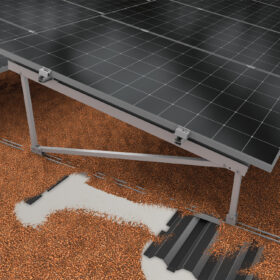
K2 releases mounting structure for green roofs
K2, a mounting system supplier, showcased a range of new solutions at Intersolar Europe, including a new mounting structure for green rooftops. It allows for portrait and landscape module elevation at 10 degrees and 15 degrees, with maximum module sizes of 2,400 mm x 1,350 mm.
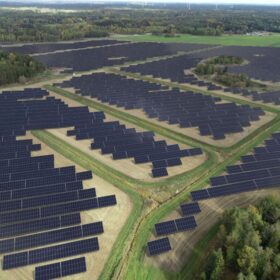
Alight secures 12-year PPA for 64 MW solar plant in Sweden
Alight says it has obtained a 12-year power purchase agreement (PPA) for a 64 MW solar plant in Sweden. It says it will turn to non-recourse project financing, despite the conventional practice of financing PPA-backed solar assets with equity in the country.
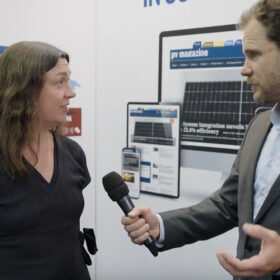
Solar Leaders at Intersolar 2023: ‘Making modules cheaper will benefit buyers, but it won’t create demand’
At Intersolar in Munich, pv magazine spoke with Jenny Chase, solar analyst at BloombergNEF, about falling solar module prices, oversupply, bottlenecks in the European markets, and labor issues. According to Chase, lower panel prices won’t instantly create demand, and manufacturers should prepare to deal with very low margins. She also said we can expect to see more consolidation in the industry, and bankruptcies for uncompetitive producers may be unavoidable.
