Australian developer plans 900 MW of solar for green hydrogen project
Traditional owners in Western Australia will partner with advisory firm Pollination to develop what could be Australia’s largest solar farm. The move is part of plans to build a gigawatt-scale green hydrogen and ammonia project in the northwestern part of the country.
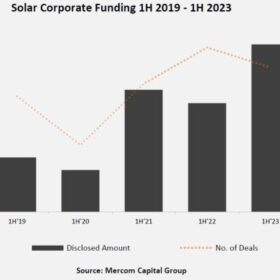
Solar corporate funding up 54% YoY in H1
Mercom Capital Group’s latest report shows that almost 25.5 GW of solar projects were acquired in the first half of this year, totaling $18.5 billion.
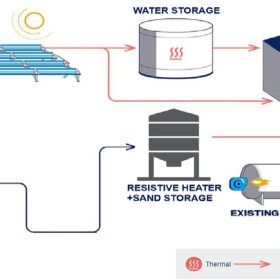
Hybridizing PV, sand storage, solar thermal energy for steam generation
A Finnish-Swedish consortium has designed a hybrid system that uses photovoltaics and solar thermal energy separately to provide steam to industrial facilities. The PV unit is coupled to a sand-based thermal storage system and reportedly contributes to lower the levelized cost of energy of the entire system.
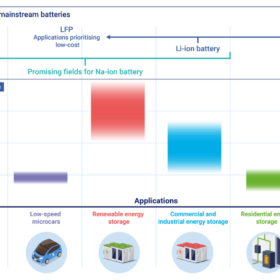
Sodium-ion battery fleet to grow to 10 GWh by 2025
Global demand for sodium-ion batteries is expected to grow to just under 70 GWh in 2033, from 10 GWh in 2025, at a compound annual growth rate (CAGR) of 27%, according to UK-based market research company IDTechEx.
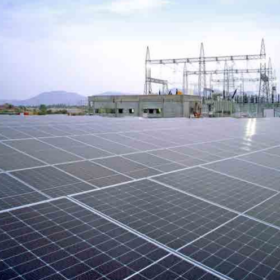
India’s JSW Energy targets 40 GWh/5 GW of storage capacity by 2030
JSW Energy aims to reach 20 GW of power generation, along with 40 GWh/5 GW of energy storage by 2030. It is also investing in solar manufacturing and green hydrogen production.
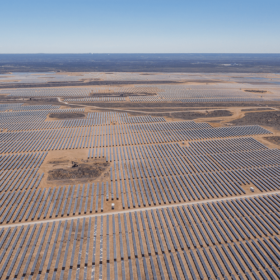
Texas curtailed 9% of solar generation in 2022
Transmission and energy storage limitations in Texas resulted in wasted renewable energy last year.

Chinese PV Industry Brief: CHN Energy plans 1 GW offshore floating PV project
CHN Energy has signed a deal to build 1 GW of offshore floating PV in China’s Shandong province, while JA Solar has announced plans to raise around CNY 9 billion ($1.3 billion) to support capacity expansion.
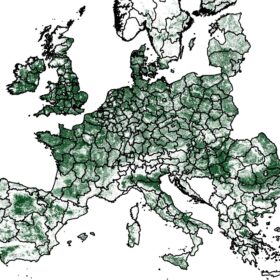
New research identifies potential for 51 TW of agrivoltaics in Europe
Researchers in Denmark have analyzed the potential of PV systems and their influence on the underlying farmland in three different agrivoltaic projects, including vertical bifacial optimal tilted, horizontal single-axis tracking, and vertical bifacial setups. They also calculated the potential for agrivoltaic in every region in the European Union and found that the eligible areas are unevenly distributed.

TSUN launches kit for garden, balcony PV systems
Chinese inverter manufacturer TSUN says its new balcony PV kit consists of one or two 20.7%-efficient solar modules, a 96.7%-efficient microinverter, a bracket, and cables.
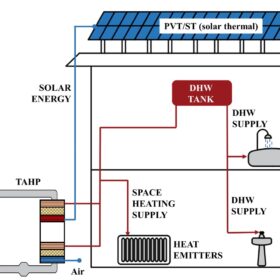
Thermoacoustic heat pump prototype for residential building heating
An international research team has fabricated a heat-driven thermoacoustic heat pump prototype that is claimed to achieve a heating capacity of 5.7 kW and a coefficient of performance of 1.4, with a heating temperature of 300 C and a heat-sink temperature of 55 C. The device uses medium/low-grade heat sources and is purportedly able to offer a complementary solution to the existing domestic heating methods.
