
Australia’s renewables pipeline continues to grow at record speed led by solar PV
The Australian renewables sector was not immune to a host of challenges that marked the first half of the year, but the pipeline of renewable energy projects in the country reached new heights. While new construction dipped to a four-year low and financial close remained out of reach for a great number of projects, the second half of the year is looking more positive, according to Norwegian consultancy Rystad Energy.
Japanese banks back world’s second cheapest solar project
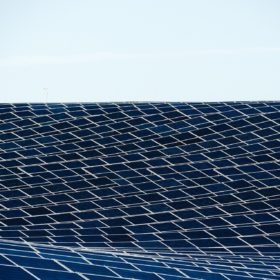
Qatar General Electricity and Water Corporation has announced financial close on the 800 MW Siraj-1 solar project with Mizuho Bank and the state-owned Japan Bank for International Cooperation. The project, secured in a tender by France’s Total and Japan’s Marubeni, will sell power for $0.01449/kWh.

India installed 7.6 GW of solar in the last fiscal year, and plans another 8 GW by April
Some 5.9 GW of utility scale PV generation capacity was added in 2019-20, plus 1.7 GW of rooftop solar, with domestic module manufacturers enjoying around 40% of the market.

Germany reinstates regular solar tender schedule
The extraordinary measure of not publishing the results of successful project bids – brought in during the Covid-19 crisis – is set to be lifted from September, when the projects allocated in procurement rounds over the last five months will be made public.

Tender for 32 MW solar project subcontractors in Chad
The planned power plant marks the first phase of a 60 MW scheme 30km north of the capital, N’Djamena. The overall project is being developed by UK-based Private Infrastructure Development Group and French company Smart Energies International.
Construction begins on 64 MW unsubsidized Polish solar plant
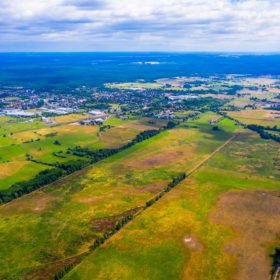
The project, set to be commissioned this year, will sell power to an unspecified industrial client under a power purchase agreement.

Haiti addresses power shortages with 130 MW of PV capacity
The president of the Caribbean island has announced several ground-mounted PV plants will be tendered, along with 60 MW of thermal power generation capacity. The projects are part of a plan to provide the nation with universal access to electricity during Jovenel Moïse’s five-year term in office.
Native shrubs and solar panels working in tandem in South Australia
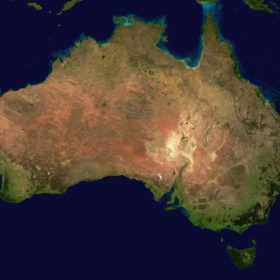
State utility SA Water is partnering with an environmental organization to ‘re-vegetate’ almost a ton of native seedlings under a large scale solar arrays. Beneath the ground-mounted PV projects, native vegetation should return to the formerly agricultural land, and the resulting scrub is expected to protect panels from soiling.
Solar film with integrated optics to increase performance of PV panels
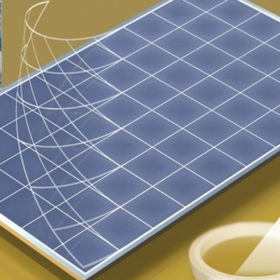
Finnish company ICS has developed a foil which it claims can significantly increase the yield of solar panels, when applied to the edges of a PV module. Germany’s Fraunhofer ISE has confirmed that the increase in performance for conventional solar modules with the solar film is ranging from 5% to 10%.
Two strategic Euro solar deals rumored
State-owned power company China Three Gorges is reportedly ready to offer up to €600 million for 13 solar assets owned by X-Elio in Spain while Germany’s ib vogt is up for sale, according to Reuters.
