
Ecuador plans 2.1 GW power auction with high share of solar
The Ecuadorian government has announced plans to tender 2,100 MW of new power generation capacity, with large-scale solar projects expected to account for a significant part of the mix.

Australia’s biggest battery starts commercial operations
The first stage of the biggest approved battery project in Australia is now fully operational with Origin Energy announcing the initial stage of the 700 MW / 3,160 MWh battery energy storage system being built next to its Eraring coal-fired generator in New South Wales has commenced commercial operations.
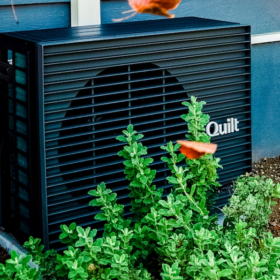
Quilt launches 3-zone ductless heat pump for residential applications
U.S. startup Quilt has introduced a new three-zone ductless heat pump for residential use, offering independent temperature control across three areas with a single outdoor unit. The system uses R32 (difluoromethane) as the refrigerant and can reportedly achieved a coefficient of performance of 4.2 at 8 C.
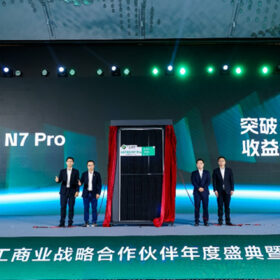
Astronergy launches 670 W TOPCon solar module with 24.8% efficiency
China’s Astronergy says its ASTRO N7 Pro module targets utility-scale PV plants and commercial rooftops, offering quarter-cell architecture, bifacial gains, and a 30-year performance guarantee.
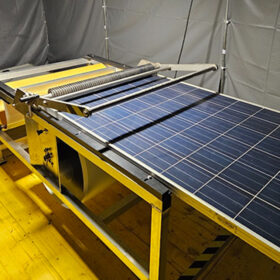
French startup offers on-site solar module repair solution
France-based DOTSun has developed an on-site repair solution for solar panels with degraded backsheets, compatible with PA, PVDF, and PET types. The system uses a compact laminator to apply a protective film to the rear side of the module, reportedly restoring insulation and extending the service life of up to 2,000 panels per site.
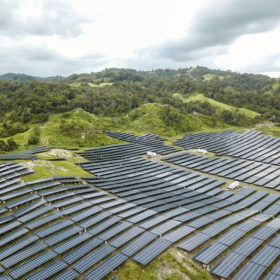
Grid code standards key to unlock Indonesia’s solar potential
New research shows how modern technical standards, combined with broader regulatory and grid reforms, are essential to ensure system reliability in the Indonesian electricity system as renewable capacity grows.
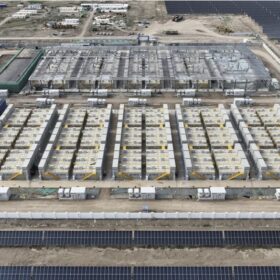
China connects world’s largest vanadium flow battery project
The GWh-scale long-duration energy storage project is expected to reduce curtailment in Xinjiang, a region of China with high solar and wind generation, and transmission bottlenecks. The flow battery installation is co-located with a PV plant.

Peru adds 454 MW of large-scale PV in 2025
Peru commissioned about 454 MW of utility-scale solar capacity in 2025, taking cumulative installed PV capacity to roughly 952 MW, according to the government.

Semi-transparent photovoltaics cost-competitive only up to 50% transparency
Researchers from Spain found that semi-transparent PV systems are commercially viable only up to about 50% transparency, as higher transparency sharply reduces efficiency and increases system costs. Their analysis shows that declining power density, and not balance-of-system or financing factors, is the main driver of higher LCOE, even in high-irradiation regions.
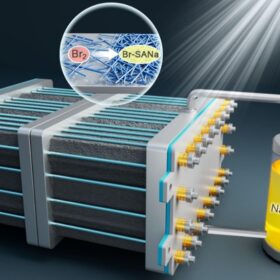
Corrosion-free bromine flow battery promises longer life and higher energy density
A new two-electron bromine chemistry sharply cuts corrosion while boosting performance, opening a clearer path for zinc–bromine flow batteries at grid scale.
