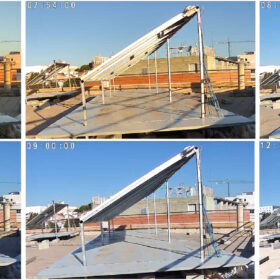
Precise backside irradiance modeling for bifacial PV is often unnecessary
A European research group has developed a new “empirical” method for measuring the backside irradiance of bifacial PV system. The proposed approach was tested across several European locations and it was found to enable annual performance calculations with a fixed backside irradiance share value.
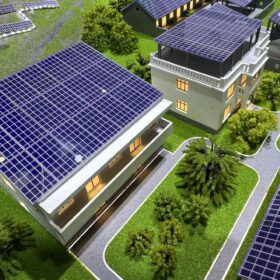
How to cut U.S. residential solar costs in half
Residential solar is about to get more expensive as the 30% investment tax credit expires at the end of 2025. OpenSolar, operator of a free solar design and project management platform, highlights cost-savings opportunities for the industry.
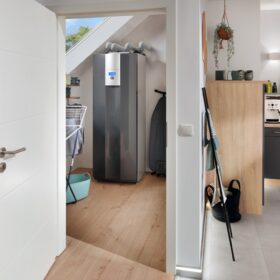
Ait-Group launches residential heat pumps with low propane charge
Germany’s Ait Group has introduced residential ground-source heat pumps using less than 150 grams of propane, based on results from the Fraunhofer ISE LC150 research project. The new systems deliver up to 6 kW of heating with a seasonal coefficient of performance of 5.14.
Behavioral factors behind residential PV adoption in China
Researchers have combined the theory of planned behavior, the technology acceptance model, and diffusion of innovations theory to investigate rooftop solar adoption in China. From a 1,200-person survey, they found that subjective norms and social influence from peers and community had a surprisingly more substantial effect than personal attitudes or perceived ease of use.

High-pressure systems boost global solar irradiance in early 2025
In a new weekly update for pv magazine, Solcast, a DNV company, reports that the first half of 2025 has delivered favourable solar conditions across several key solar generation regions around the globe, with many population centres experiencing above-average irradiance.

France Solar enters liquidation
French solar installer France Solar has entered liquidation after failing to secure a buyer, following its placement in receivership on April 28.

Netherlands increasing vigilance on solar inverter-related cybersecurity risks
The Dutch government said it remains vigilant on potential cybersecurity threats coming from solar inverters. It minimized, however, the risk of hidden hardware components in inverters and said these devices would be “easily detectable” by the Dutch authorities.

Collision of art, culture and solar sets Guinness World Record
A residential building’s vibrant, art-drenched solar façade brought renewable energy to new heights, setting a Guinness Book of World Record for the largest solar panel mural.

Solarix Solar launches new terracotta solar panel
The Netherlands-based solar façade panel and mounting system provider has added a new terracotta rooftop module to its product range. It also announced it is expanding it sales network and boosting its manufacturing capacity after raising €5.5 million in financing.

SolarPower Europe maps EU solar tracker supply chain
SolarPower Europe has underscored the role of domestic mounting system manufacturers in driving PV deployment across Europe, while calling for the adoption of international customs codes, stricter quality standards, and the inclusion of fixed-tilt racking systems in national resilience technology lists under the EU Net-Zero Industry Act (NZIA).
