
Cyber threats for PV: What are supply chain attacks and how do they work
Supply chain attacks compromise PV systems by targeting trusted vendors, software, or hardware components, allowing attackers to infiltrate systems indirectly through legitimate channels. These attacks can disrupt operations, introduce hidden vulnerabilities, and impact multiple assets at once, making vendor security and system validation critical for resilience.

France deploys 1.41 GW of solar in Q1
New figures from grid operator Enedis reveal that France added 1,418 MW of new PV capacity in Q1 2026, roughly matching Q1 2025, despite a broader sector slowdown linked to regulatory changes and delayed tenders.

Thermostatic radiator valves can reduce energy consumption in air-source heat pumps by 6-8%
Researchers in the United Kingdom found that thermostatic radiator valves can reduce air-source heat pump space heating energy use by 6–8% without affecting system efficiency when used correctly. TRVs must be applied carefully in well-designed, balanced systems with at least one open flow path, as they mainly serve as a secondary tool for room-level comfort control rather than a replacement for proper heat pump design and low flow temperature operation.

Pur Energy launches all-in-one battery–based home backup power solution
India-based Pur Energy has launched the PuREPower 3.0 Lite, an all-in-one lithium battery-based power backup solution positioned as a cleaner and more compact alternative to conventional inverter and lead-acid battery combinations for the residential segment.
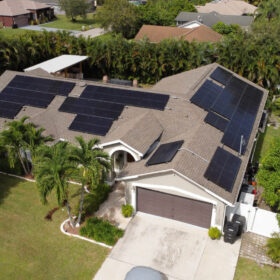
U.S. startup aims to make signing up for solar as easy as signing up for cell phone service
Florida-based Terra Energy offers solar subscriptions to homeowners on an initial 36-month agreement and seeks to retain those customers for the long-term by proving it can offer something better than the alternative.

Cyber threats for PV: What are credential compromise attacks and how do they work
Credential compromise attacks allow adversaries to gain unauthorized access to PV systems by stealing or guessing valid login credentials, enabling them to manipulate operations, disrupt monitoring, or take control of critical assets. These attacks can lead to operational instability, reduced energy production, and safety risks, making strong authentication and access control essential for system resilience.

Free midday electricity key to drive consumer demand to match excess PV generation
Free midday electricity schemes aim to shift household demand into periods of high solar PV generation, reducing midday surplus and evening fossil-fuel ramp-up. Research on Australia’s Solar Sharer program suggests such incentives could significantly improve renewable utilization, but outcomes depend on consumer behaviour, load shifting, and rebound effects.
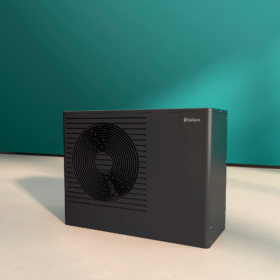
Vaillant launches space-saving residential heat pump
The German manufacturer said that its new air-to-water heat pump system uses propane as a refrigerant and is available in three variants with outputs of 5 kW, 7 kW, and 11 kW. The new product can reportedly achieve a coefficient of performance of up to 4.93.
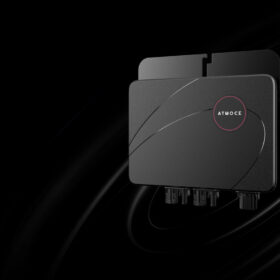
Atmoce debuts microinverter connecting two solar modules
Atmoce’s new MI microinverter series connects two PV modules per unit while still providing module-level power optimization.

Mexico updates distributed generation rules to formally integrate energy storage
The new provisions published by the country’s energy regulator are aimed to adjust the technical and administrative criteria for distributed generation, particularly with regard to energy storage, installed capacity limits, and interconnection procedures.
