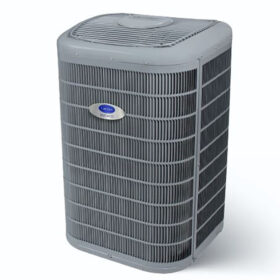
Carrier debuts residential heat pump for cold climates
The U.S. heating specialist said its new heat pump system can operate “reliably” at -30 C and achieve 100% heating capacity at -17 C, with full cooling capacity being achievable at 50 C.

GE Appliances unveils residential hybrid heat pump water heater
The U.S. manufacturer said its new heat pump water heater can provide up to 60% more hot water than standard electric water heaters. The system is available in 240 V and 120 V options and with a capacity ranging from 160 L to 190 L.

France concludes C&I rooftop PV tender with average price of €0.09753/kWh
The French authorities have concluded a commercial and industrial (C&I) rooftop PV tender with an average price of €0.09753 ($0.1110)/kWh. The government allocated 191 MW of PV capacity in total.

Search4solar launches sale of secondhand solar modules
Search4solar, a solar panel trading platform based in the Netherlands, is urging developers, installers and governments to reuse second-life modules, with more than 100,000 used panels currently in stock.
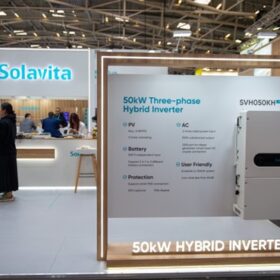
Solavita launches 30-50 kW hybrid inverter series
Chinese inverter maker Solavita says its new hybrid inverter series offers high PV oversizing, multi-port battery integration, and grid-smart controls to meet growing demand for scalable solar-plus-storage in commercial and industrial (C&I), and large residential markets.
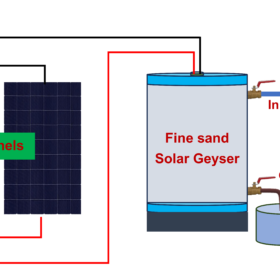
PV-powered fine sand solar geyser for domestic hot water
The system is described by its creators as a cost-effective solution for water heating by storing thermal energy in fine sand. Techno-economic analysis indicated the system is economically viable for domestic water heating applications, with an initial capital cost of $278 and an expected lifespan of 25 years.

Estimating potential-induced degradation in PV systems used for water pumping
Researchers in Spain have developed a new method to estimated potential-induced degradation (PID) in solar modules used in PV-driven water pumping systems. The proposed approach can detect PID from the open-circuit voltage measurement of the system’s PV module strings.

Germany’s FC St. Pauli to install rainbow-colored stadium PV array
German soccer club FC St. Pauli is installing a 316 kW rainbow-colored photovoltaic system on its stadium roof using 1,080 modules supplied by Switzerland’s Megasol Energie.

New control strategy for PV-driven air source heat pumps
Researchers in China have developed a new methodology to improve the performance of solar-powered air source heat pumps. The proposed approach reportedly increases the energy efficiency of optimized building systems by 18%, with solar energy potentially reducing their carbon content by 37.78%.
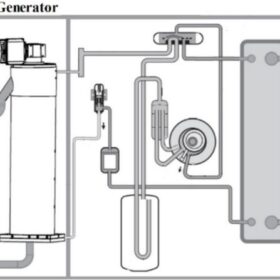
New research shows viability of residential ice-source heat pumps
Scientists in the United Kingdom have demonstrated the feasibility of residential ice-source heat pumps in cold climates and densely populated areas. They designed a heat pump system that utilizes existing gas pipelines to transport water.
