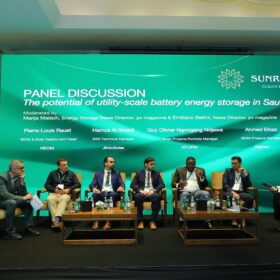
Key takeaways from Sunrise Arabia 2025
A recent joint event by Solarabic and pv magazine in Riyadh highlighted Saudi Arabia’s rapid push for clean energy and localization, with new factories and large storage projects taking shape.
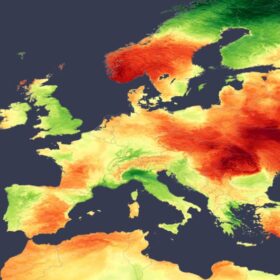
Eastern Europe sees solar gains as Western regions experience setbacks
In a new weekly update for pv magazine, Solcast, a DNV company, reports that February saw a stark contrast in solar conditions across Europe, with eastern regions benefiting from strong irradiance while western and southern areas faced setbacks due to storms and persistent cloud cover.

Ireland urges schools to avail of solar scheme before extended deadline
The Irish government is appealing to schools to apply for the second round of its solar for schools program before the March 7 deadline. More than 750 schools have been approved for funding in this phase to date.

FranklinWH launches 15 kWh residential battery
The 15 kWh aPower 2 battery can store input from solar, grid, generator and EV.
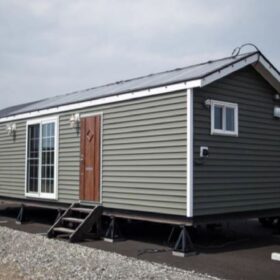
PV-driven mobile homes for disaster recovery
Researchers in Japan have demonstrated solar-powered mobile homes including a bedroom and living room with an integrated kitchen, bathroom, restroom, and lavatory. Their work demonstrates how renewable energy can enhance resilience in temporary housing solutions, reducing reliance on external power sources.

German housebuilder puts some LG home batteries into standby mode after explosion
Construction company Viebrockhaus made the move after an incident in Schönberg where a home fitted with a solar-plus-storage system suffered an explosion which destroyed a wall of the house. The builder, and battery maker LG, have put some units into standby mode and others have had their operating capacities reduced.
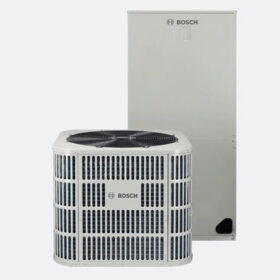
Bosch unveils residential heat pumps based on inverter ducted split tech
The new product series uses R-454B as the refrigerant and is available in four versions.
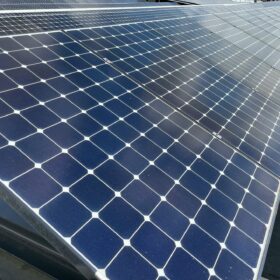
Israel targeting 100,000 new solar rooftops by 2030
Israel’s Ministry of Energy and Infrastructure says its 100,000 Solar Roofs Program aims to add 1.6 GW of new solar capacity by 2030.

Spanish company unveils PV-driven thermal system for self-consumption
Spain’s H2 Fusión says its Solar Heat PR5 system uses PV energy to produce hot water for self-consumption in industrial buildings, reaching temperatures of up to 92 C.

Colored modules for building-integrated photovoltaics
Taking inspiration from the 3D photonic structures on a Morpho butterfly’s shimmering blue wings, scientists at Germany’s Fraunhofer Institute for Solar Energy Systems ISE have developed colored solar panels that can be incorporated into a building’s exterior practically invisibly while maintaining high efficiency.
