
Aptera’s solar car to use Maxeon PV cells
Aptera’s solar electric vehicle, equipped with almost 700 W of PV cells, can drive up to 40 miles (64 km) on solar alone, or 1,000 miles on batteries.

Meyer Burger secures $255.2 million to scale up production capacity to 3 GW
Swiss PV manufacturer Meyer Burger says it wants to rapidly expand its production of heterojunction solar cells and modules, following its recent supply agreement with US project developer DESRI.
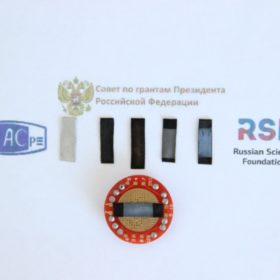
Heterojunction solar cell based on new black silicon achieves 7.5% efficiency
Russian researchers have developed a heterojunction device based on a new wide-band black material called “black silicide.” The cell has averaged reflection (AVR) of 15% in the spectral range of 200 nanometers to 1,800 nm and purportedly can reach an efficiency of 10%.

Premier Energies unveils India’s first M10 bifacial solar cell
Premier Energies has become India’s first solar manufacturer to develop a bifacial monocrystalline silicon PERC solar cell based on the 182 mm format. The cell has an efficiency rating of up to 23.2%.
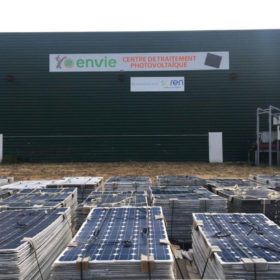
French consortium commissions solar module recycling facility
Soren and Envie 2E Aquitaine have inaugurated a new solar module recycling facility in Saint-Loubès, France.

New study shows impact of shading on PV cells
Scientists in China have studied the impact of shading on single solar cells and on simple arrangements of two cells connected in series or in parallel.
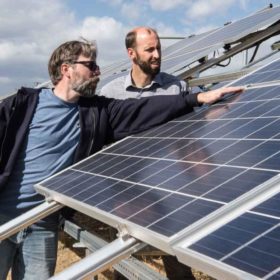
How long do rooftop residential solar panels last?
Multiple factors affect the productive lifespan of a residential solar panel. In the first part of this series, we look at the solar panels themselves.
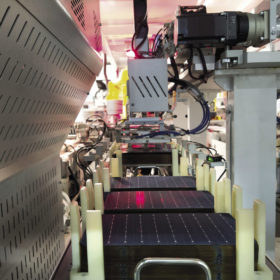
Adani targets 10 GW of polysilicon-to-solar module capacity by 2025
India’s Adani Solar will expand its PV cell and module manufacturing capacity to 10 GW per year by 2025, with backward integration up to the polysilicon stage.
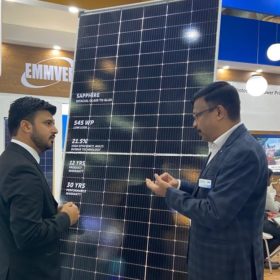
Emmvee unveils 545 W glass-to-glass bifacial solar module
India-based Emmvee has unveiled its Sapphire line of glass-to-glass bifacial modules, with power outputs ranging from 530 W to 545 W. The modules are built with 144 mono PERC half cells and 10 busbars.
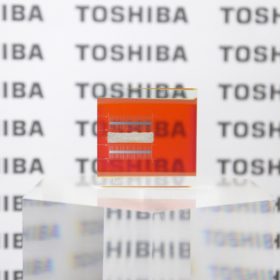
Toshiba raises efficiency of transparent cuprous oxide solar cell from 8.4% to 9.5%
Toshiba has revealed that it has improved the power conversion efficiency of a transparent cuprous oxide solar cell to 9.5%, from the 8.4% mark it reached in December 2021. It enlarged the cell and suppressed carrier recombination at the edge of the cuprous oxide (Cu2O) generation layer, which usually causes generation efficiency degradation.
