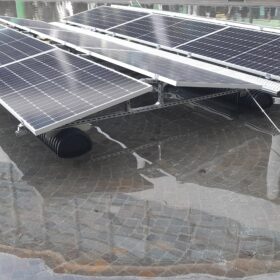
Italy launches tender for 30 MW of floating PV
The Italian authorities will offer 30 MW of floating PV capacity in its June 8 FER2 auction, reducing the quota after weak participation in the first round.
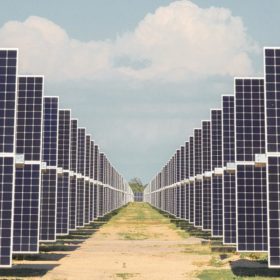
Negative power prices reach all-time high on the Iberian Peninsula in Q1
Spain and Portugal recorded a surge in negative electricity prices in Q1, driven by strong solar generation and relatively low demand on the Iberian Peninsula. Further records are likely in 2026 as solar capacity grows, with more frequent price volatility expected across Europe.
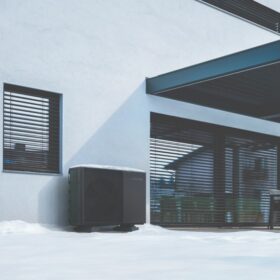
Samsung launches residential air-to-water heat pump reaching SCOP of up to 4.9
The Korean manufacturer said its new heat pump system can achieve a seasonal coefficient of performance of up to 4.9 under low-temperature floor heating conditions, and approximately 3.78 under higher-temperature operation at 55 C.
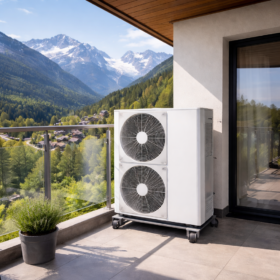
Could global warming improve heat pump efficiency in Alpine regions?
Researchers in Italy analyzed air-to-water heat pump performance in Alpine regions, focusing on how start-up and defrost cycles affect efficiency under current and future climate conditions. Their simulations show that while warmer temperatures slightly reduce defrosting losses and modestly improve efficiency, start-up cycling losses remain significant and continue to limit overall performance gains.

Solar rebound effect could raise Europe’s electricity demand 5% by 2050
Research from Germany’s FernUniversität Hagen finds the solar rebound effect, caused by households increasing their total electricity consumption after installing a solar system, is currently a blind stop in Europe’s energy system planning and abatement scenarios.

Cyber threats for PV: What are cloud platform and software-as-a-service exploitation attacks and how do they work
Cloud and SaaS platforms are now central to PV plant operations, but their centralization creates a high-impact cybersecurity risk where a single compromise can expose or disrupt entire fleets of installations. Attackers exploit weaknesses like stolen credentials, insecure APIs, multi-tenant flaws, and platform vulnerabilities, making strong identity controls, secure APIs, and continuous monitoring essential defenses.
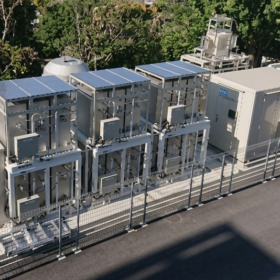
Low-pressure hydrogen bridges seasonal gaps in solar-powered Japanese building
Taisei Corporation has demonstrated that a building can operate entirely on solar power by combining PV generation with a hybrid storage system integrating batteries and low-pressure hydrogen at a test facility in Yokohama. An EMS-enabled setup using lithium-ion batteries and PEM electrolysis balanced short- and long-term energy supply and demand, enabling year-round renewable operation, according to the company.

TBEA launches 500 kW string inverter
The new inverter is designed around standardized 5 MW and 5.5 MW PV sub-arrays with the aim to reduce balance-of-system costs. It features a maximum efficiency of 99.0% and a high-voltage architecture of up to 1,600 Vdc and 1,000 Vac.

Will we finally buy European PV modules?
In a new monthly column for pv magazine, the Becquerel Institute explains why Europe’s solar manufacturing outlook is shifting from decline to cautious opportunity, driven by rising energy uncertainty and new regulations like the Net-Zero Industry Act that create fragmented, nationally defined markets with partial protection for domestic producers. While demand and policy support are strong, complexity, uneven implementation, and competition risks mean success will depend on how quickly and strategically industry players navigate this narrow window.

Philippines announces 7th renewables auction
The country’s seventh green energy auction is set to procure rooftop, ground-mounted and floating solar projects across the Philippines, with increased allocation in Mindanao. The Department of Energy plans to release the auction’s terms of reference during the second quarter of this year.
