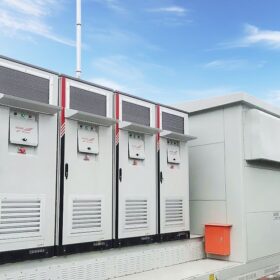
World’s first grid-scale, semi-solid-state energy storage project goes online
The 100 MW/200 MWh energy storage project featuring lithium iron phosphate (LFP) solid-liquid hybrid cells was connected to the grid near Longquan, Zhejiang Province, China.
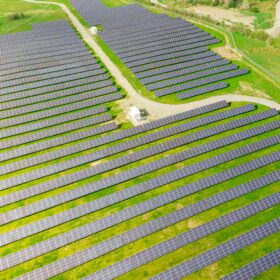
Vietnam opens energy market to bilateral PPAs
The Vietnamese government issued new rules this week allowing direct power purchase agreements (DPPA) between independent power producers (IPPs) and energy consumers, according to state-owned media. IPPs can now sell power to final clients via the national grid or direct connection lines.

Rio Tinto building more solar at mining sites
Multinational mining company Rio Tinto has finished installation work at the Diavik Diamond Mine in Canada and has announced plans for two 5.25 MW plants at a bauxite mine in Australia’s Northern Territory.
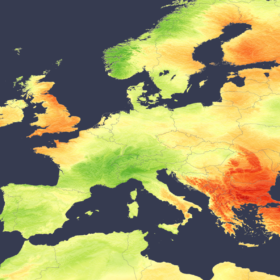
Weather standstill limits European solar production in June
In a new weekly update for pv magazine, Solcast, a DNV company, reports that, while in June Western Europe experienced below-average irradiance, Eastern Europe and the Balkans in particular saw a notable increase, resulting from persistent and static weather patterns.
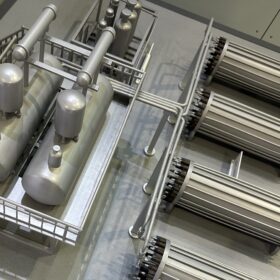
India launches several green hydrogen tenders
Mangalore Refinery and Petrochemicals has started accepting bids to build, own, and operate a green hydrogen plant to supply 10 kilotons per annum (ktpa( of green hydrogen. It says it will sign a 25-year gas purchase agreement with the successful bidder.
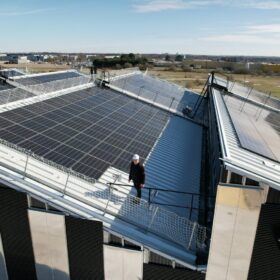
Solar on atypical, steeply sloped roofs
French company HDF Energy has equipped its new polymer electrolyte membrane (PEM) hydrogen fuel-cell production plant with a 500 kW solar project, by adjusting the PV modules and inverters to fit the sawtooth roof design.

How to make seaports into energy communities with PV, wave energy
Researchers have simulated the operation of seven renewable energy communities in the Port of Naples and found them to offer lower life cycle costs. Using varying capacities of solar and wave energy, they were able to optimize the system to a 90% self-consumption rate. They also offered a scheme for the management of a port energy community.
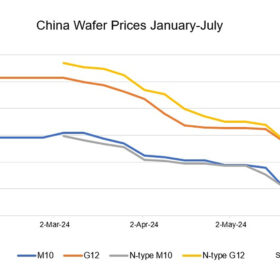
Wafer prices stable-to-soft on weak demand
In a new weekly update for pv magazine, OPIS, a Dow Jones company, provides a quick look at the main price trends in the global PV industry.
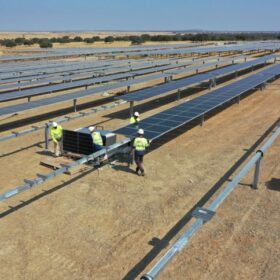
Spain authorizes 7.2 GW of new PV projects
The Spanish authorities have approved 7.2 GW of new PV projects so far this year, with 3.1 GW authorized in the second quarter alone.

Solar cell based on high-entropy hybrid perovskite achieves 25.7% efficiency
Researchers in China have built for the first time an inverted perovskite solar cell relying on a high-entropy hybrid perovskite material. The result is a device with an improved open-circuit voltage and fill factor, due to reduced non-radiative recombinations and optimized interface.
