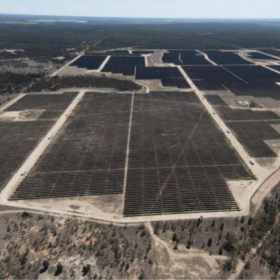
Japanese companies switch on 204 MW of solar in Australia
Japan’s largest oil refiner, Eneos, and Tokyo-based trading firm Sojitz have jointly opened the 204 MW Edenvale Solar Park in Queensland, Australia.
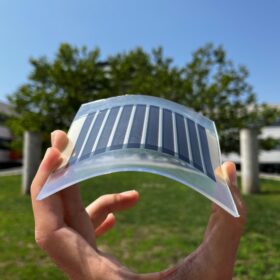
European research group creates injection molding plastic solar cells
A French-Spanish research team developed organic photovoltaic modules embedded into plastic parts through high throughput injection molding. The researchers injected thermoplastic polyurethane in the modules and found it enhances their mechanical stability while keeping a high flexibility.

Bangladesh approves tariffs for 370 MW of solar
Bangladesh has approved tariffs of $0.10/kWh for 370 MW of solar at three sites, ranging in size from 70 MW to 200 MW, as the government seeks to expand its generating capacity. The country also has a 1.2 GW pipeline of solar projects under construction.
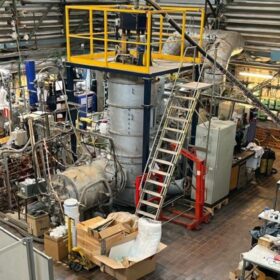
Swedish startup to use green hydrogen plasma in pilot reactor for solar grade silicon
Encouraged by lab results and a feasibility study, Swedish startup, Green14, in collaboration with Sweden’s Royal Institute of Technology (KTH) plans to build a pilot-scale reactor to make solar grade silicon with a hydrogen plasma process. The company sees the pilot as a step towards using a more sustainable method to produce solar grade silicon for the PV industry at its own gigawatt-scale plant.

SolarPower Europe to support European PV without trade barriers
SolarPower Europe’s board members have issued a joint statement calling for three measures to safeguard the European solar industry, as they claim that tariffs and trade barriers are not viable solutions.
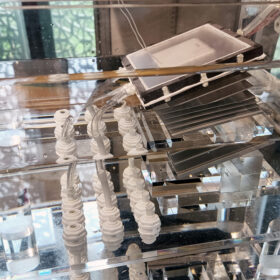
MIT scientists develop solar desalinator with high water output
Massachusetts Institute of Technology (MIT) researchers have developed a solar desalinator with high water output, via a multi-stage system of evaporators and condensers. It offers cost-effective solar desalination, making solar-produced drinking water cheaper than tap water for the first time.
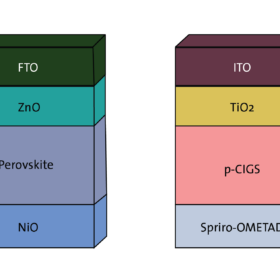
Novel perovskite/CIGS tandem PV cell design promises 38.39% efficiency
A research team in Bangladesh has simulated a perovskite-CIGS PV device that can reportedly achieve a remarkable tandem cell voltage of 2.48 V. The proposed method is also applicable for tandem cells composed of other materials.

Chile to become second-largest battery market in Americas after US
Chile is now on track to become the second-largest battery market in the Americas, following the United States. As of this year, the Latin American nation has switched on 12 storage projects, with a total capacity of 1.3 GW. It currently has 85 energy storage projects, totaling 6.4 GW, in various stages of development.
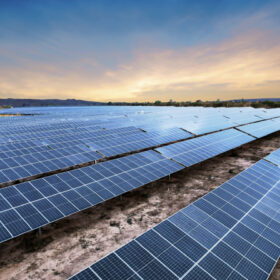
Atlas Renewable Energy switches on 600 MW of solar in Brazil
Atlas Renewable Energy has commissioned 600 MW of solar capacity in Brazil, following the completion of the Lar do Sol and Casablanca plants in the state of Minas Gerais. The facilities will provide energy to Unipar and Anglo American via power purchase agreements (PPAs).

Brazilian water tank maker unveils new polyethylene PV mounting structures
Brazil’s Fortlev Solar has created a new polyethylene mounting structure to significantly cut installation times. It weighs 15 kg and uses the weight of natural and manmade materials for anchoring, rather than relying solely on fixed supports.
