
‘An immediate transition to copper is technically and economically feasible’
With silver prices rising, more large solar manufacturers are expected to switch to copper for cell metallization. Radovan Kopecek of ISC Konstanz tells pv magazine that he expects the entire industry to follow. Ning Song of the University of New South Wales says a small efficiency tradeoff may be acceptable if the cost savings are significant and do not introduce new reliability risks.
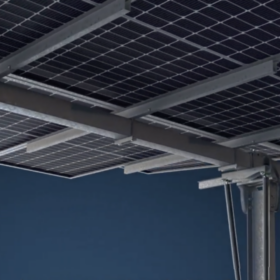
Solar Steel presents new 2P single-row solar tracker
Spanish tracker manufacturer Solar Steel has introduced an upgraded 2P single-row tracker designed to simplify assembly, improve standardization, and support deployment on complex terrain, including agrivoltaic projects.
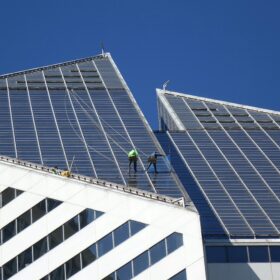
Photovoltaics and jobs: The solar PV sector is the largest employer in the renewable energy industry
The twelfth edition of the International Renewable Energy Agency’s Renewable Energy and Jobs report, in collaboration with the International Labour Organization (ILO), provides the latest data and estimates of renewable energy employment globally. It finds global renewable energy jobs reached 16.6 million in 2024, but growth slowed. The solar photovoltaic sector is by far the largest employer in the renewable energy industry, accounting for over 7.2 million jobs worldwide. The report calls for stronger public action to build domestic supply chains and ensure a more inclusive workforce.
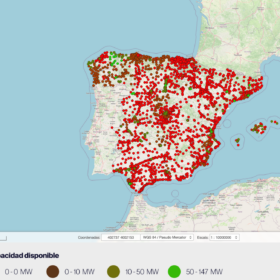
Spanish electricity grid reaches 85.7% saturation after 2.8 GW loss
Spain’s electricity grid has lost nearly 2.8 GW of available capacity in two months, lifting substation saturation to 85.7% and leaving more than 5,200 facilities without spare capacity, according to new analysis.
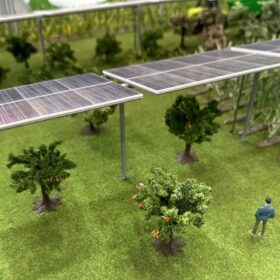
‘Agrivoltaics is not just a land-sharing concept, but a systems-level solution to some of the world’s most pressing challenges’
Scientists have conducted a six-sphere literature analysis of agrivoltaics, considering sustainability, soil–crop productivity, socioeconomic resilience, solar power generation, spatial efficiency, and species. They found that, under optimal terms, agrivoltaics may generate over $1 trillion in added global agricultural income.
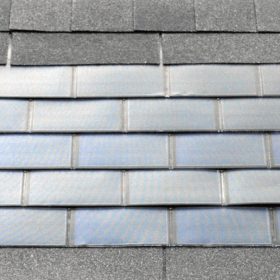
IEA PVPS invites modelers to join first coloured BIPV intercomparison
IEA-PVPS Task 15 has launched its first modeling intercomparison exercise on coloured building-integrated photovoltaics (BIPV) and is inviting PV modelers and researchers to evaluate their methods using real-world performance data.
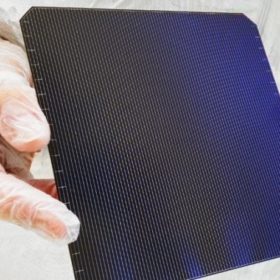
French scientists discover new UV-induced degradation pathways in heterojunction solar cells
Scientists from French research institute CEA-Liten have identified hydrogen migration in doped selective layers as the primary driver of UV-induced degradation in silicon heterojunction solar cells. They have also found that combined light and thermal light-soaking treatments can partially restore performance and improve long-term UV stability.

Australian startup moves forward with perovskite solar manufacturing plans
Halocell Energy is set to benefit from the development of a sovereign supply chain for high-purity precursors to perovskite after signing a memorandum of understanding with Queensland advanced materials company Lava Blue.

Italy installs 6.4 GW of PV in 2025
The country reached a cumulative installed PV capacity of 43.5 GW at the end of December, according to new figures released by Italian grid operator Terna.
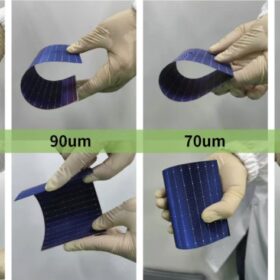
Ideal Energy commissions AI-enabled flexible HJT pilot line for space
China-based PV equipment supplier Ideal Energy (Shanghai) Sunflower Semiconductor has completed an AI-enabled pilot line for ultra-thin, flexible heterojunction (HJT) solar cells, targeting lightweight power systems for space and near-space applications.
