
Vietnam sets $0.026/kWh tariff for net-metered solar power
Vietnam plans to introduce a net-metering scheme for rooftop PV. The Ministry of Industry and Trade (MoIT) has proposed a tariff of VND 671 ($0.026)/kWh for surplus solar power.
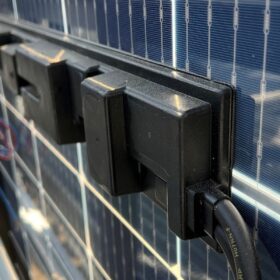
German researchers develop ‘communicative’ PV panels
A German research team is conducting practical tests to see how solar modules with integrated radio technology can be linked to form an overall network. The “communicative” panels should represent a simple and cost-effective solution for monitoring and controlling small-scale photovoltaic systems.
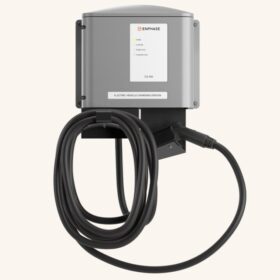
Enphase Energy releases EV charger for commercial fleets
Enphase Energy has developed an electric vehicle (EV) charger for commercial fleets. The CS-100 provides up to 19.2 kW of continuous power output and allows fleet operators to set up charging schedules using the Enphase proprietary COSMOS interface.
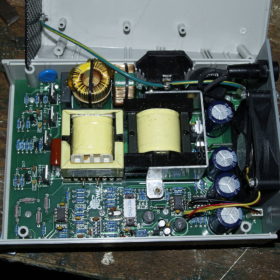
Cybersecurity guidelines for smart inverters
The National Institute of Standards and Technology has flagged a cybersecurity risk for smart inverters, and is developing guidelines to prevent cyberattacks.

Energy management market to roughly double in Europe by 2030, says LCP Delta
New analysis from LCP Delta finds Germany is Europe’s top market for home energy management systems and predicts European yearly sales will more than double by the end of the decade.
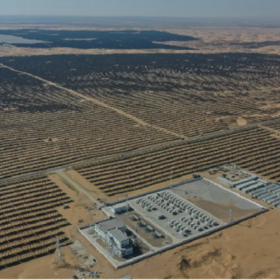
China Three Gorges to build 16 GW renewables cluster in Inner Mongolia
China Three Gorges has announced plans to build a 16 GW renewables cluster in China’s Inner Mongolia region, including 8 GW of solar, 4 GW of wind, a 200 MW solar thermal system, a 4 GW coal plant, and a 500 MWh energy storage system.
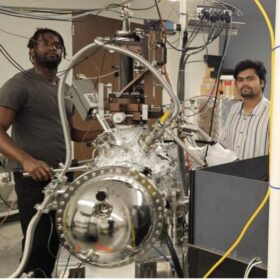
Organic solar cell gains counterintuitive efficiency boost from entropy
A research team at the University of Kansas have found that organic semiconductors known as non-fullerene acceptors demonstrate a high solar cell efficiency due to a reversed heat flow.
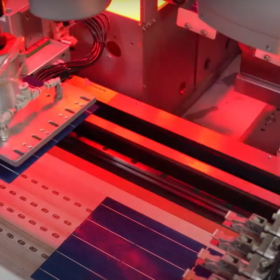
Indosolar starts production at 1.3 GW solar module factory
Indosolar, a subsidiary of Waaree Energies, has started production at its new 1.3 GW solar module manufacturing facility in India.
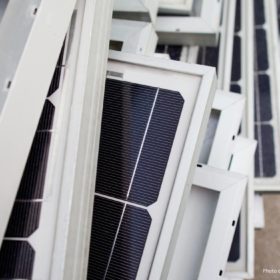
IEA-PVPS identifies 456 patents in PV module recycling
The IEA Photovoltaic Power Systems Programme’s (IEA-PVPS) latest report on solar panel recycling offers a comprehensive review of all existing technologies in this market segment, from pure mechanical recycling to innovative techniques such as as light pulse treatment, water-jet cleaning, pyrolysis, and chemical treatments.
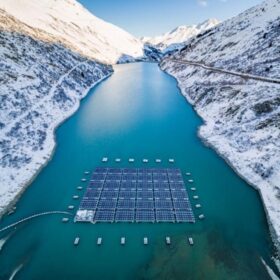
High-altitude floating PV has energy payback time of 2.8 years
New research from Switzerland showed that alpine floating PV systems can outperform lowland or ground-mounted counterparts in terms of energy yield and sustainability. The scientists found that the main material-reduction potential of such floating PV installations lies in the resource-intensive mounting system.
