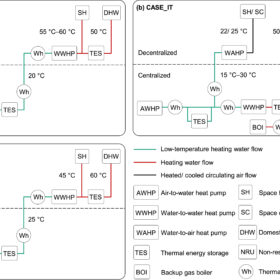
Researchers demonstrate technical feasibility of retrofitting PV-driven heat pumps in multi-family buildings
A research group led by Germany’s Fraunhofer ISE has conducted what it describes as the first empirical study on PV-assisted two-stage HP systems in existing multi-family buildings. Its findings show that substantial PV electricity exports result in greater avoided non-renewable primary energy use.

New research sheds light on voltage deficit in selenium solar cells
An international research team has investigated the impact of intrinsic point defects in selenium solar cells and has concluded that these defects are not responsible for voltage deficit. The scientists rather believe interfaces and extended defects may be the cause of this well-known issue for this kind of PV device.
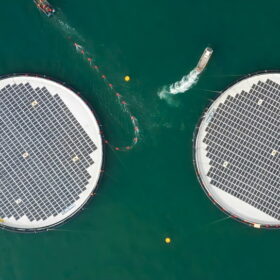
GCL SI presents 480 W solar modules for offshore projects
GCL System Integration (GCL SI) introduced its NT10/60GT floating solar module at the recent SNEC 2025 trade show in Shanghai. It developed the seawater-resistant solution in collaboration with Norway’s Ocean Sun.
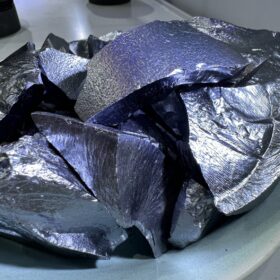
Chinese PV Industry Brief: Polysilicon price fell by another 6.27% this week
The China Nonferrous Metals Industry Association (CNMIA) says polysilicon prices fell as low as $4.74/kg this week, with only 11 producers currently operating at reduced capacity.

French parliament rejects proposal for moratorium on solar, wind
The French National Assembly has rejected an amendment that could have jeopardized the country’s energy transition.

Bangladesh begins solar module exports
Bangladesh has started exporting PV modules, with Dhaka-based Radiant Alliance Ltd. shipping 64.6 MW to US-based CleanGrid Incorporation. The company produced the passivated emitter and rear cell (PERC) and tunnel oxide passivated contact (TOPCon) modules at its 600 MW factory using solar cells from Laos and Indonesia.
EU publishes non-price criteria for renewables auctions
The European Union has adopted new rules requiring member states to include non-price criteria such as sustainability, resilience, and project execution in renewable energy auctions.
France shifts electricity spot market to 15-minute intervals
France will shift its electricity spot market to 15-minute trading intervals starting this year, aligning with EU standards and adapting to increased renewable energy integration. The change will also affect producer compensation contracts.

H3 Dynamics, XSun partner on solar, hydrogen, electric unmanned aerial systems
France-based Xsun and H3 Dynamics announced a collaboration to develop a solar, hydrogen and battery powered autonomous aerial system with integrated power management and able to navigate at low altitudes.
Improving LECO-compatible silver pastes to ensure TOPCon reliabilty
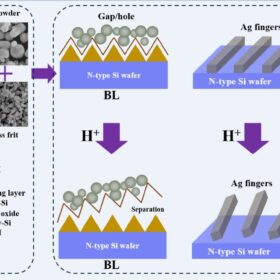
Researchers in China have created new silver pastes for TOPCon solar cell LECO manufacturing. The new pastes integrate either aluminum, gallium or iron and can reportedly keep cells’ electrodes securely anchored to the silicon cell surface due to the enhanced stability of the lead oxide (PbO) component in the glass powder.
