
Pacific Hydro commissions 293 MW of PV with 110 MW/220 MWh of storage in Chile
Pacific Hydro has brought its 293 MW Desierto de Atacama solar project online with 110 MW/220 MWh of battery storage. The Atacama Desert facility is expected to supply 780 GWh of clean electricity annually to more than 310,000 homes.

Croatia deploys 417 MW of solar in 2025
Croatia’s solar capacity is on course to exceed its wind energy capacity for the first time in early 2026. With utility-scale projects facing regulatory deadlock and the end of net-metering for the residential market, growth is being led by commercial and industrial customers.
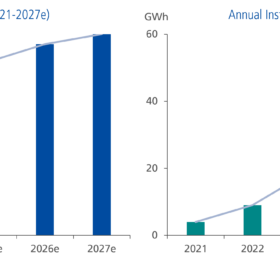
Global solar enters period of adjustment, as market conditions redefine rules of competition
Global solar growth is flattening in major markets as oversupply from China and India drives prices down and shifts competition from sheer volume to execution, policy alignment, and system integration. Across the U.S., Europe, and China, energy storage is becoming essential for project viability, making PV-plus-storage and strong EPC partnerships the new basis for winning projects in 2026 and beyond.
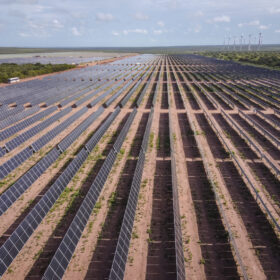
Capex-driven strategies can reduce solar LCOE by 20%
An international research group has conducted a literature review of capital expenditure-driven levelized cost of electricity optimization strategies for utility-scale PV systems. Tracking optimization, system voltage escalation, and advanced system design are identified as the most promising cost reduction areas. “The next wave of PV research must be LCOE-native, system-level, and deployment-validated,” a member of the research group said.

RenewSys launches reel-format sheet encapsulants for junction box, busbar insulation in solar modules
The Indian PV manufacturer has launched Conserv Augmensheet, a sheet encapsulant for insulation and sealing of busbar and junction box areas in solar modules. Supplied in reel format, the product supports automatic feed-in on fully automated module manufacturing lines, reportedly enabling higher productivity and consistent processing for solar module production.
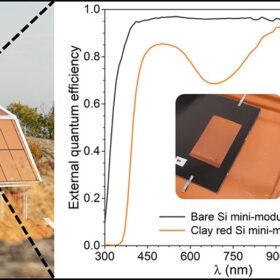
Danish researchers develop color-tunable BIPV foil
The use of a novel roll-to-roll process and optimization technology resulted in polymer foils for use in colored PV modules in a potentially wide range of colors with low iridescence and low levels of efficiency loss.

Voices of leadership: How inclusion is powering innovation forward
This article of the Women in Solar+ Europe series brings together experts and leaders featured throughout 2025 to reflect on why leadership must be redefined for today’s realities. Their insights highlight inclusion not as an add-on, but as the very heart of effective, future-ready leadership.

China to abolish solar export tax rebates in April
China will scrap value-added tax export rebates for PV products from April 1, 2026, while cutting battery rebates ahead of a full phaseout, raising export costs for manufacturers and potentially pulling shipments forward into early 2026.

Malaysia launches new net metering scheme for rooftop PV
Effective since January 1, 2026, the Solar Accelerated Transition Action Programme (Solar ATAP) aims to build on Malaysia’s previous net metering program’s efforts to maximize the use of rooftops for solar generation by incentivizing consumers to export excess generation to the grid. The capacity limit has been set at 100% of the consumer’s maximum demand, or 1 MW.
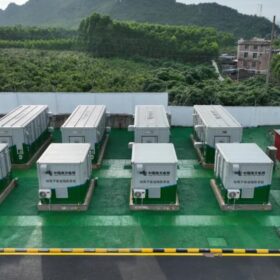
Sodium-ion battery cells already near lithium-ion cost parity, set to get cheaper
By 2050, sodium-ion batteries with fast learning rates could deliver storage at 11–14 €/MWh – cheaper than lithium-ion at 16–22 €/MWh – while also offering higher energy-to-power ratios and high cycle durability, a new research finds.
